92 people packed into a seminar called "The Business Talk," and right at the start, Akimasa Sugikubo asked one question: "Has anyone here studied business management before opening their own shop?" Not a single hand went up. This craftsman—the mastermind behind Yoyogi Park's "365 Days" and the scaling strategy behind countless bakeries—then dropped his own theory: the number of possible business models equals the number of possible "technique × personality" combinations. He wasn't telling shop owners to copy some business model. He was saying the opposite—turn your own personality into the business model.
This study session, held on June 1st and hosted by Nisshin Flour Milling's Collection, used two shops as case studies that ended up taking completely opposite paths: Tokyo Sasazuka's "Dough-ist" and Tokyo Nishi-Oi's "Tempagne."
Tsukasa Kawahara and Lizhen Chen: Turning Tangzhong Into a Global Export Business

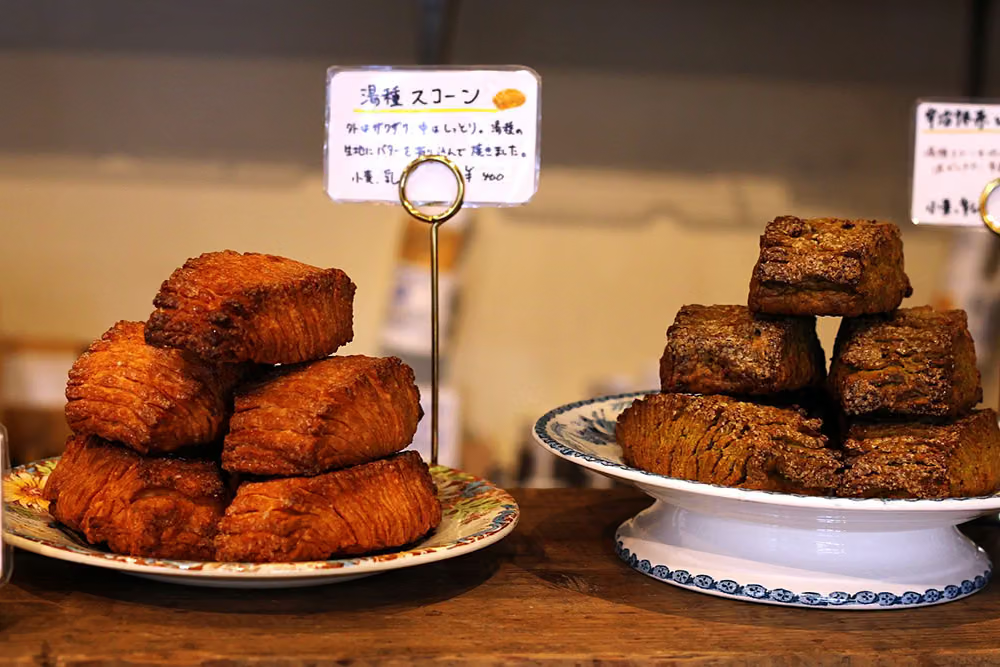
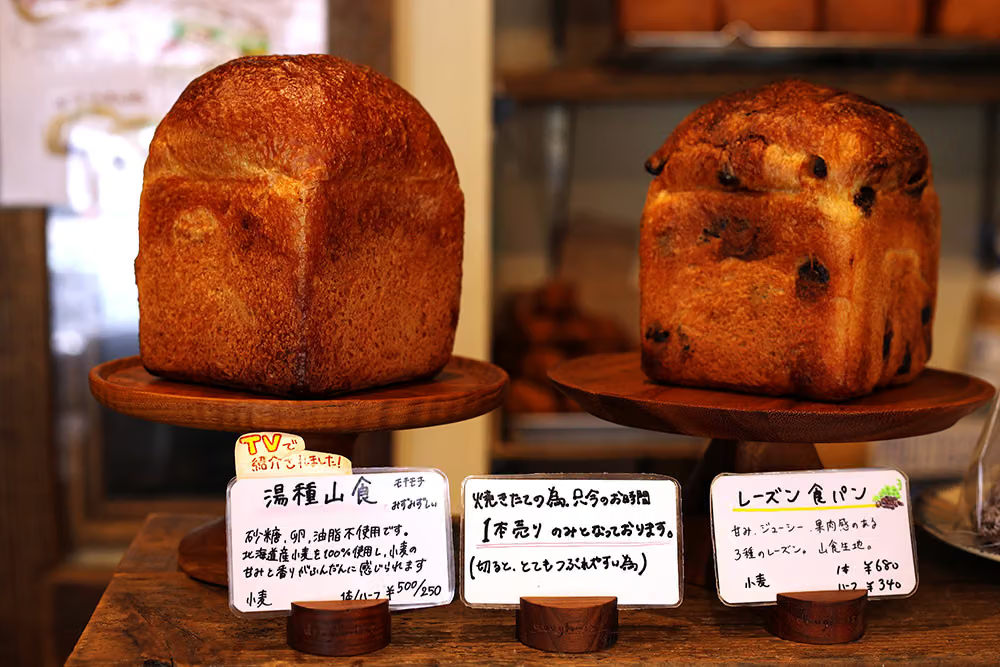
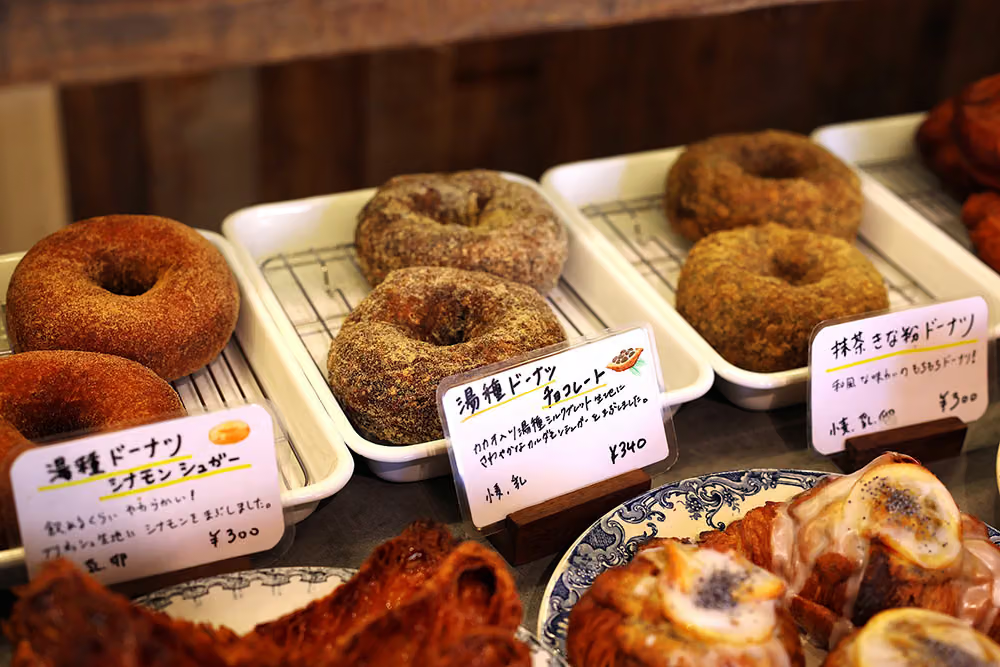
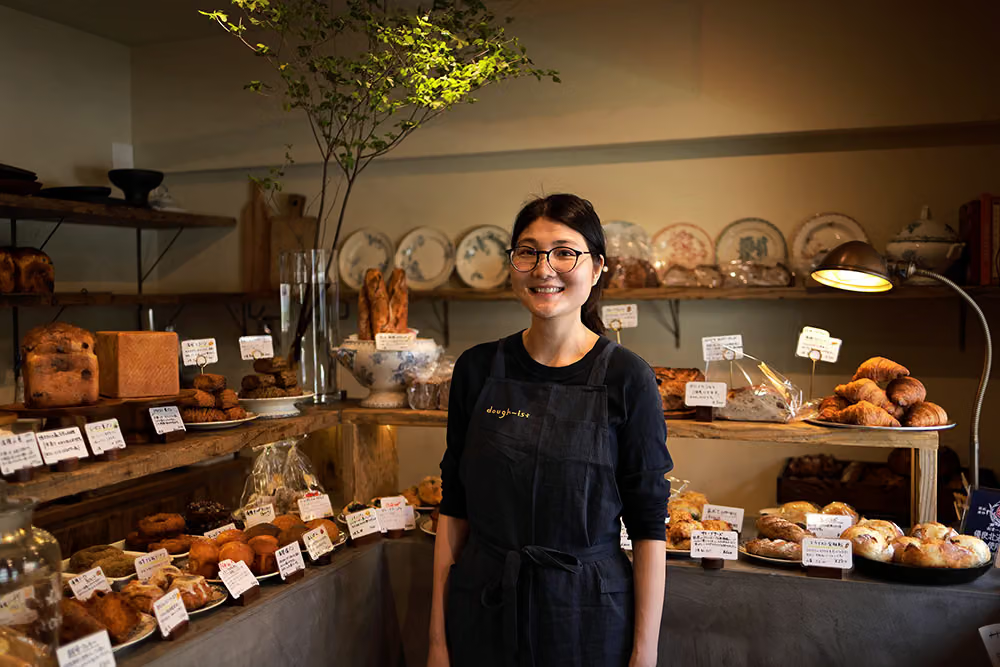
The name "Dough-ist" is itself a fusion of technique and personality. Head baker Tsukasa Kawahara is known as the "Tangzhong Sorcerer." Every product in the shop—shokupan, doughnuts, baguettes, country bread, scones, croissants, rye bread—is made entirely using the tangzhong method, a technique where part of the flour is scalded with hot water to gelatinize the starch before mixing into the main dough. This boosts water content, adds a chewy texture and sweetness, and keeps the bread from drying out even after sitting for a while. During his time as head baker at Kojimachi's "No.4," Kawahara took tangzhong—originally just a supporting technique—and rebuilt an entire texture system around it by increasing the ratio and adjusting water variations.
The other key figure is co-owner Lizhen Chen. She had previously co-run several bakeries in China before coming to Japan in 2019 in search of new possibilities. "China's bread culture is still growing—you can sell anything—but I knew there had to be better-tasting bread out there," she said. After encountering the work of young craftsmen in Tokyo like Kawahara and Taisuke Arikata, head baker at Cétuit Bon Nidée, she became convinced that this "new-generation Japanese method" had real potential for export into Asian markets. It took her a year to convince Kawahara, and the two opened the shop together in 2024.
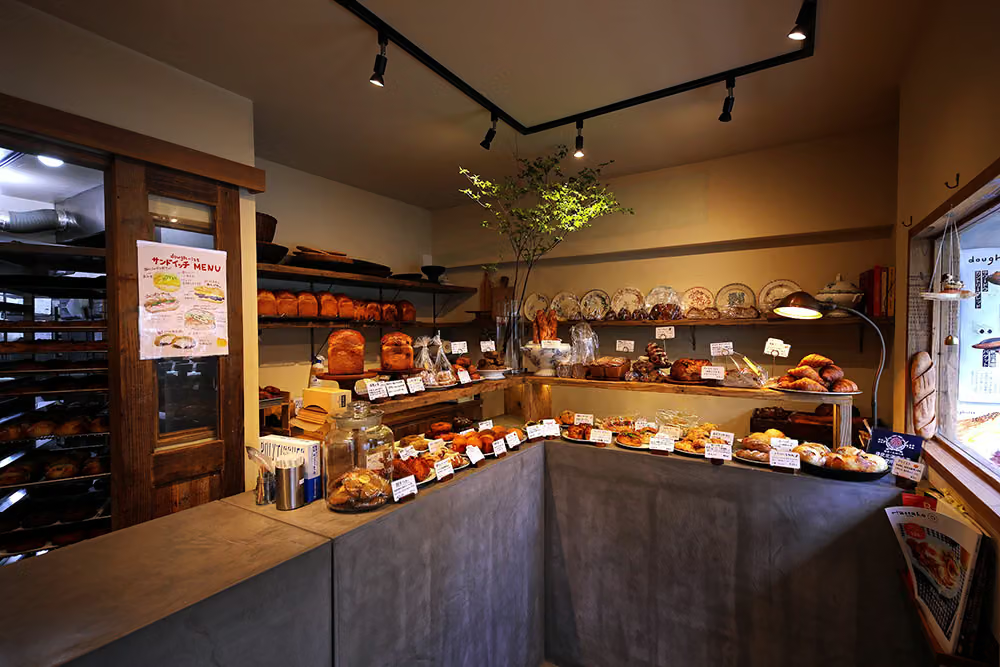
Kawahara handles production, Chen handles the business side—a clear division of labor. Since Kawahara is constantly booked for seminars both in Japan and abroad, the shop has quantified its processes so that staff with varying levels of experience can still reliably reproduce the same quality. Of the shop's roughly 66 square meters (20 tsubo), 56 square meters (17 tsubo) is kitchen space, with only about 10 square meters (3 tsubo) for the storefront—a ratio that says it all: this place functions more like a base for passing down technique than a retail shop. Currently there are 8 full-time staff (6 in production including Kawahara, 1 in sales, plus Chen) and 7 part-timers, for 15 total. The homepage reads, "Growing together with bread," and the logo is a seed motif. On social media, staff faces are deliberately shown—"we don't want anyone hiding behind the head baker."
Kohei Shirai: The Minimalist Answer of One Person, Two Locations, Zero Rent
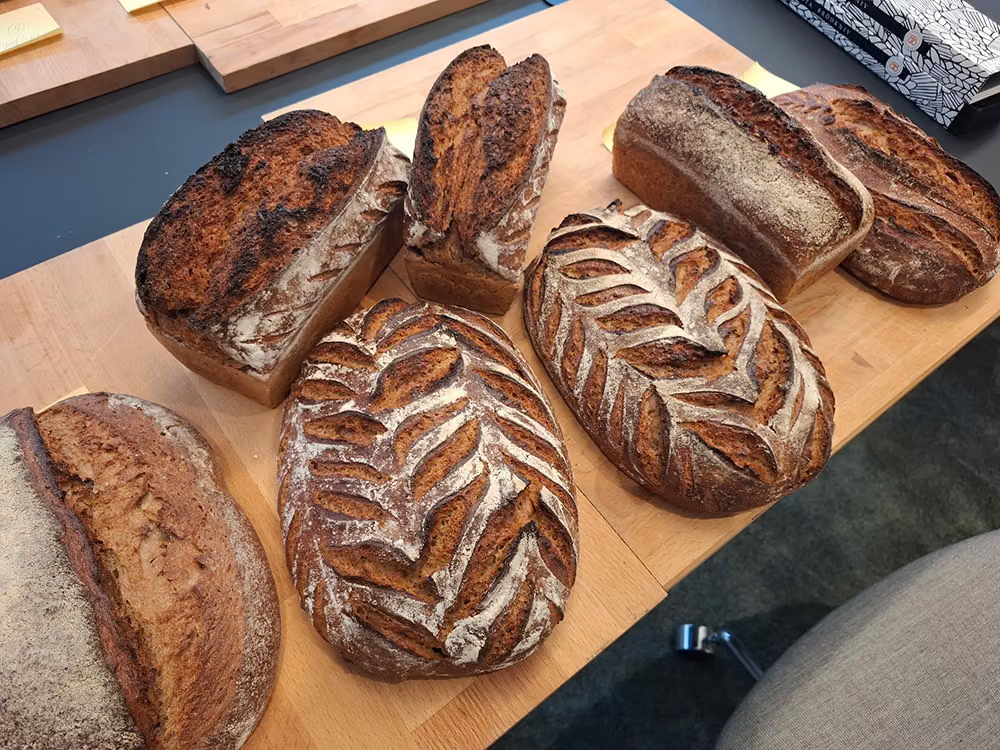
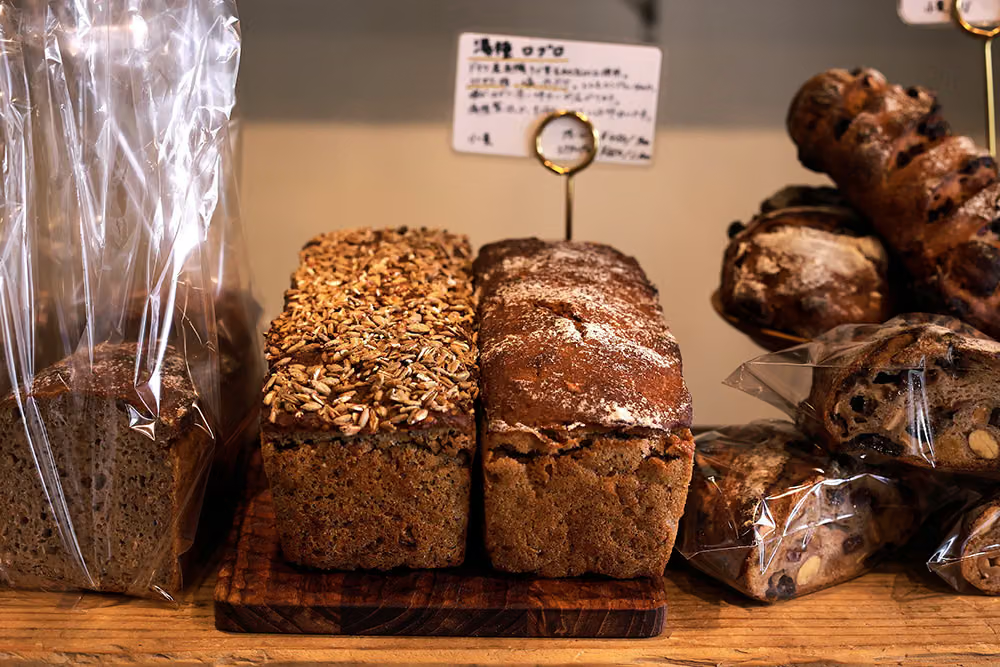
"Tempagne" takes the completely opposite approach. Owner Kohei Shirai splits his time between Saku City in Nagano Prefecture (his grandmother's home) and Nishi-Oi in Tokyo (his own family home), buying wheat directly from Nagano farmers, milling it himself, and bringing it to Tokyo to bake. The Nishi-Oi shop is only open three days a week (Thursday, Friday, Saturday—with Friday for pre-order pickup only), and combined with market stalls in Nagano and other locations, the shop operates roughly 15 to 16 days a month, with actual working days (sourcing, milling, prep) totaling around 22 to 23 days.
The menu consists of just 7 or 8 varieties of French-style country bread, all handled solely by Shirai. Labor costs: zero. Rent: zero. Compared to the typical Japanese bakery's 50 to 60 items catering to every kind of customer, Shirai admits people often ask, "Can you actually make a living doing this?" But what he's observed is that there's a group of people who simply feel "it has to be this bread"—and the repeat purchase rate is high. He divides his customer base into three types: health-conscious, natural-lifestyle, and Europe-oriented—all people who eat whole wheat country bread as a daily staple. Recently he's also started supplying cafes like Togoshi Ginza's "NOG COFFEE," Kuramae's "REFRESH STAND," and Nagano City's "Cafe Aura," where the bread is turned into open-faced sandwiches.

Shirai's mentor is Yoji Tamura of Hiroshima's "Dorian," known for his "zero-waste bakery" philosophy and pursuit of a no-waste business model. Tamura once warned him: "Don't design it. Don't mix flours just to chase some flavor you've imagined in your head." Shirai says that single piece of advice made him realize that using locally grown Nagano wheat and making the most of what's already right in front of him is exactly where his own personality lies. Beyond regular markets—Nagano's "Shinshu Mori Fes" and "Earth Day in Saku," and Tokyo's "Farmers Market" and "Sakura Pan Matsuri"—he also deliberately joins smaller events started by younger locals, like the "Nawame Market" happening November 15th this year in Nagawa Town's Wada-juku. His original vision was to build a wood-fired kiln in Nagano and bake Nagano wheat with Nagano firewood, treating Nishi-Oi as just a temporary stop until he had enough capital. Now, nearly two years into the business, he plans to gradually shift his life back to Nagano while still keeping up sales in Tokyo.
At the end of the seminar, Sugikubo said that restaurants and bakeries going forward need to know how to adapt—if the croquette bread sells well, spin it off as a standalone item; if summer sales dip, sell shaved ice instead; or just close in summer and go all-in during winter, adjusting based on conditions and demand. But this flexibility has one non-negotiable condition: the "technique × personality" axis can never drift, or customers will lose track of what kind of shop this even is. Dough-ist turned tangzhong technique into a replicable, exportable system; Tempagne turned minimalism and localism into an irreplaceable daily staple. The only thing the two have in common is that axis itself.
Dough-ist is located at White House, 3-12-5 Sasazuka, Shibuya-ku, Tokyo. Open 10:00 AM to 7:00 PM, closed Mondays and Tuesdays. Tempagne is located at 3-28-1 Futaba, Shinagawa-ku, Tokyo. Open Thursdays and Saturdays from 12:00 PM to 5:00 PM; Fridays are pre-order pickup only. Check the shop's social media for actual operating days.