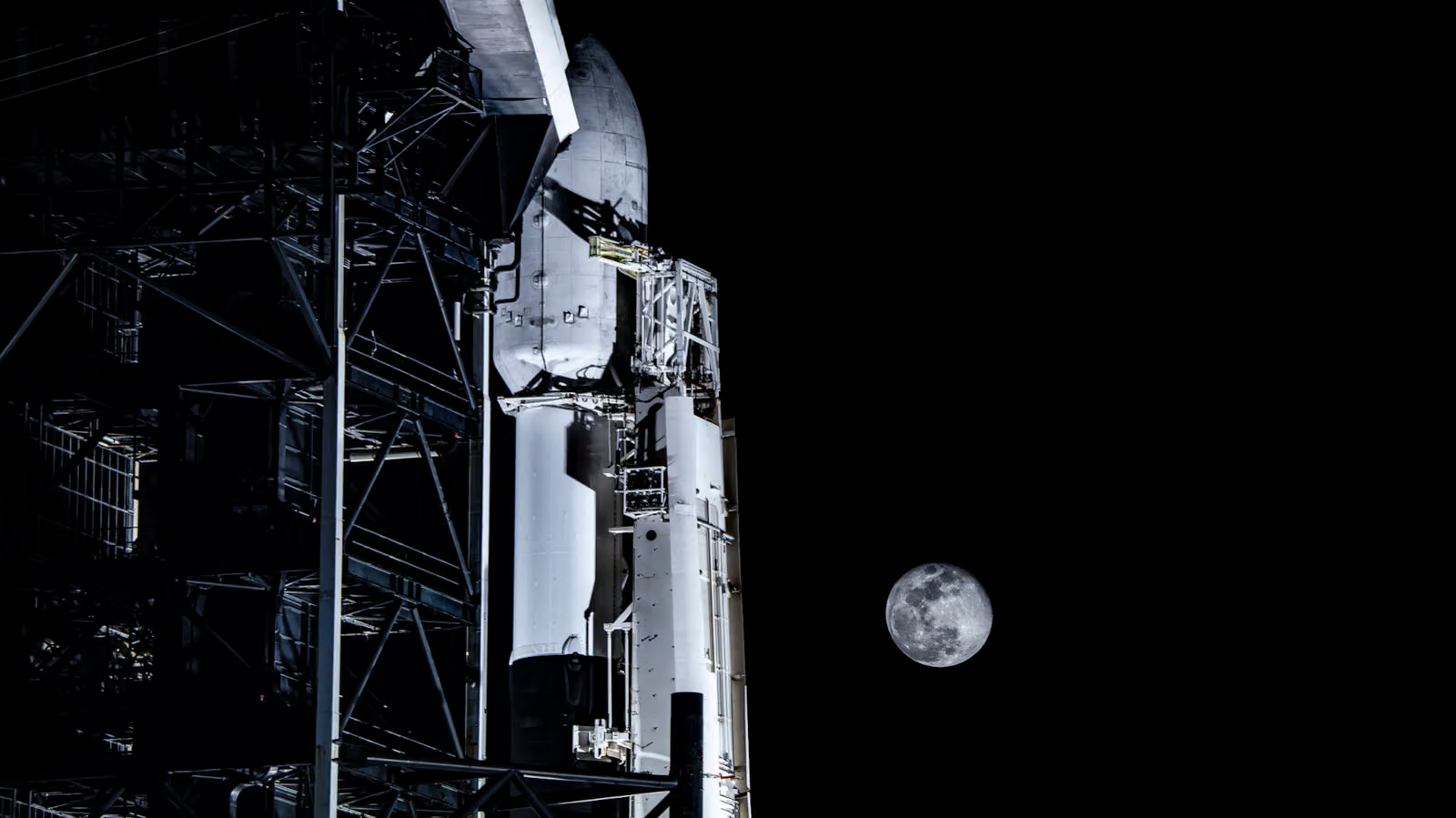
5,400 miles per hour, four tons of mass — those are the numbers behind the moment a Falcon 9 upper stage slammed into the lunar surface. This wasn't some out-of-control accident. It was a fate written into the mission plan long before launch — the only twist being that this time, the point of no return wasn't Earth's ocean, but the Moon itself.
The story starts on January 15, 2025. A SpaceX Falcon 9 launched two lunar landers into orbit as part of the Blue Ghost mission. Once its job was done, the upper stage was left behind — and according to SpaceX's own statement on X, high-energy missions bound for lunar transfer orbits like this one push the rocket to use nearly all of its remaining capability just to get the payload where it needs to go, meaning "a controlled disposal maneuver is not always possible." In other words: the tank was empty, there was no going back, and whatever happened next was up to solar activity and the Moon's gravity.
Independent astronomer Bill Grey had already flagged the trajectory back in April, posting on his own site that the rocket was on track to hit the Moon in the early hours of August 5. When that moment finally arrived, the impact happened on the sunlit side of the Moon — too bright for professional or amateur astronomers to catch it directly. The real evidence came from Chile's Very Large Telescope. Carl Schmidt, a planetary scientist at Boston University's Center for Space Physics, told CBS News that the telescope picked up a plume of sodium and lithium gas stretching "tens of kilometers" across and lingering for five to ten minutes — a detail he later elaborated on during Leonard David's Inside Outer Space show.
NASA estimates the impact carved out a new crater roughly 60 feet wide and 12 feet deep on the lunar surface. That might sound significant, but NASA also points out that the Moon regularly takes hits of similar force from random meteorite impacts — it's the man-made origin of this one that makes it notable.
Next up: NASA's Lunar Reconnaissance Orbiter and South Korea's Korea Pathfinder Lunar Orbiter are both attempting to capture images of the impact site. Whether they succeed depends on lighting conditions and timing, and any images that do make it back to Earth could take several days to arrive.
As for the space junk debate, NASA's stance is blunt: disposing of upper stages on the lunar surface "is a technically accepted and safe method," and for certain low lunar orbit missions, it's even the only practical option available.