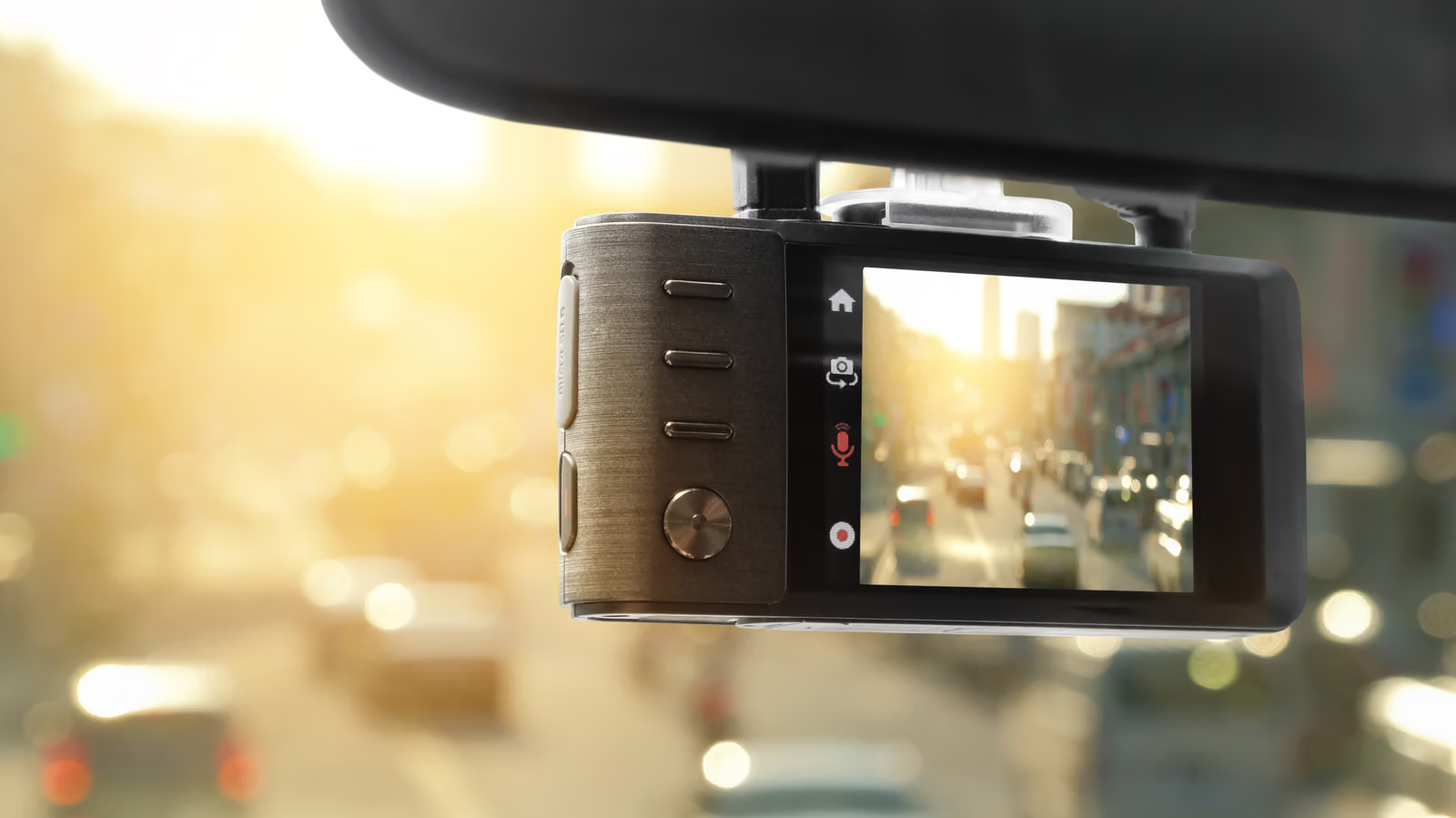
Everyone uses a dashcam these days, but few people realize that the same device, mounted the exact same way, could become illegal the moment you cross a state line. This isn't fearmongering — it's because US states each have their own rules on where dashcams can be placed, how big they can be, and even whether they're allowed to record audio. There's no unified federal standard.
Let's start with the most basic principle: the dashcam can't obstruct the driver's view. This rule is explicitly written into law in Alaska, Arizona, California, Florida, Hawaii, Illinois, Indiana, Iowa, Kansas, Kentucky, Maine, Maryland, Missouri, Nevada, North Carolina, Utah, and Vermont. But even in states where it's not codified, it's just common sense you should follow anyway.
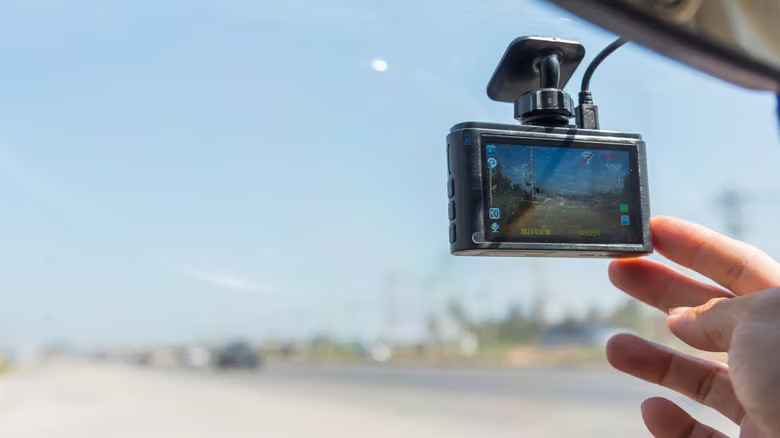
The placement rules get surprisingly specific. California requires the dashcam to be mounted in one of three designated zones on the windshield: a 7-inch square in the lower corner farthest from the driver, a 5-inch square in the lower corner closest to the driver, or a 5-inch square at the top center. Illinois is even more direct — mounting is only allowed in the lower corner on the passenger side. Alabama, Delaware, and Louisiana simply ban windshield mounting altogether. Pennsylvania and Minnesota go further, prohibiting anything from being attached to the windshield at all — dashcams there have to be moved to the dashboard instead.
Size limits also apply. Most states require the dashcam to be under 5 inches, Hawaii allows up to 7 inches, while Indiana tightens the limit to under 4 square inches.
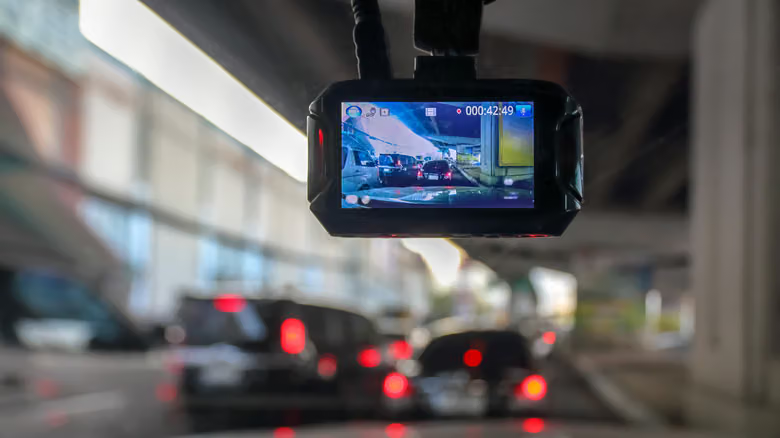
Audio recording is where things get really tricky. Thirteen states — California, Delaware, Florida, Illinois, Maryland, Massachusetts, Michigan, Montana, Nevada, New Hampshire, Oregon, Pennsylvania, and Washington — follow "all-party consent" laws, meaning everyone in the vehicle must agree before conversations can be recorded. Most other states, including New York, only require one-party consent — video recording is fine, but recording conversations needs at least one person to be aware and consenting. This barely matters for family road trips, but it's something to keep in mind when carpooling with coworkers or driving long distances with friends.
Our editorial team's advice is straightforward: before any cross-state road trip, install your dashcam to California's strictest standard first — pick a compact model in the 4 to 5-inch range and mount it behind the rearview mirror. Since that spot is already blocked by the mirror itself, it doesn't add any extra obstruction to your view. Before hitting the road, check the DMV website for your destination state to confirm which corner and size limits apply, and turn off audio recording once you enter an all-party consent state — or simply let everyone in the car know recording is on. A device being legal doesn't mean how you use it is legal too, and that gap is exactly where dashcam trouble tends to happen.
The state regulations mentioned in this article are compiled from Engadget's reporting. Please refer to each state's official DMV announcements for the most current regulations.