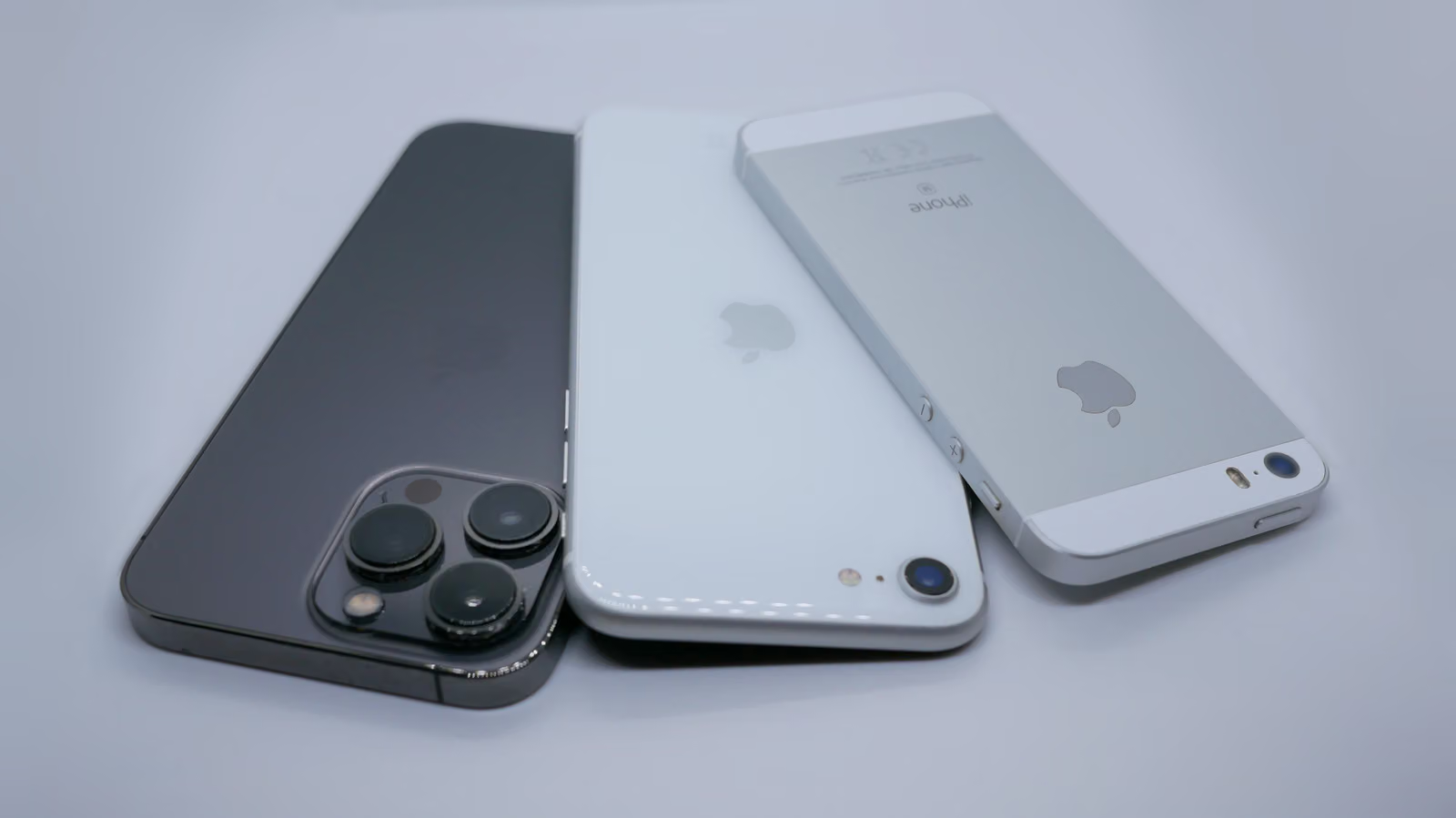
If there's one thing that best captures how much — and how little — the iPhone has changed over the past five years, it's not the growing number of camera lenses. It's iCloud's free storage. That 5GB figure hasn't budged since the service launched back in 2011. Over that same stretch, the base storage on a standard iPhone has doubled, climbing from 128GB on the iPhone 13 to 256GB on the 2025 lineup. The cloud, meanwhile, hasn't moved an inch. That contrast is the perfect entry point into the last five years of iPhone evolution — the hardware has genuinely shifted almost every single year, while certain parts of the system have stayed frozen in time.
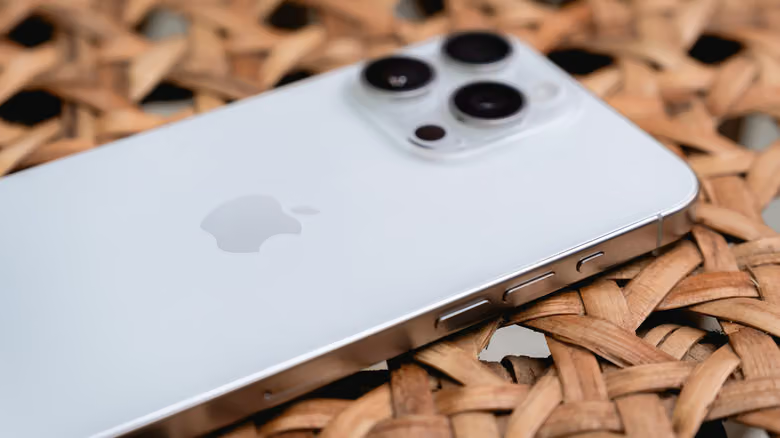
The most visible hardware turning point came at the port and button level. The Lightning port had been a fixture since the iPhone 5 in 2012, lasting over a decade until EU regulations forcing all phones sold in the region to switch to USB-C finally pushed Apple to make the change, starting with the iPhone 15 lineup in 2023. That same generation also marked the end of an era for the mute switch — the slider that had sat in the top-left corner since the original iPhone in 2007 was replaced on the iPhone 15 Pro and Pro Max by the Action Button, which kept the mute function but could also be customized through the Shortcuts app to trigger the flashlight or launch the camera, a feature that's carried through the entire lineup since the iPhone 16. The iPhone 16 and 17 (excluding the entry-level e-series) added an entirely new Camera Control button on top of that — press it and the camera opens instantly, while the touch-sensitive surface lets you adjust zoom and exposure on the fly.
The Screen: From the Notch to Dynamic Island
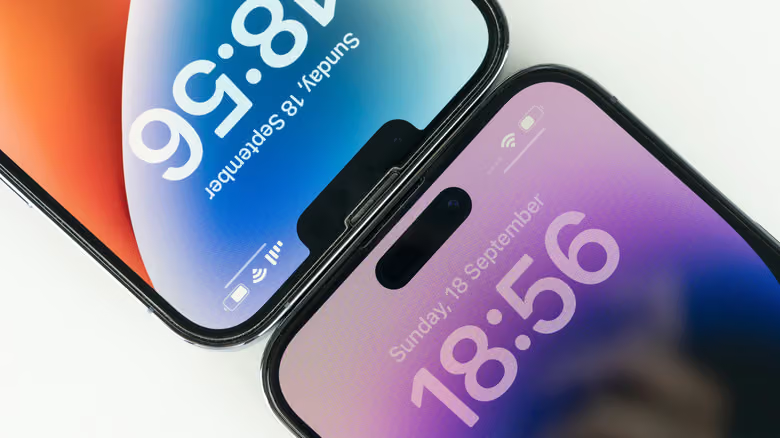
Screen changes haven't been as dramatic as the button overhaul, but they hit closer to the everyday experience. ProMotion's variable refresh rate started rolling out with the iPhone 13 Pro/Max and now covers the entire iPhone 17 lineup (including the Air) at 120Hz — buttery-smooth scrolling and gaming, dropping to 1Hz on static screens to save battery. Models without this feature are still stuck at 60Hz. The notch introduced with the iPhone X in 2017 went essentially unchanged for five full generations until the iPhone 14 Pro/Pro Max swapped it out for the Dynamic Island, which started surfacing live info like timers, navigation, and music playback. That design has stuck around on every iPhone since, except the e-series. Always-On display debuted on Pro models starting with the iPhone 14 Pro, and now the entire iPhone 17 lineup (including the Air) has it too.
Camera Specs Doubled, AI Showed Up Late but Caught Up Fast
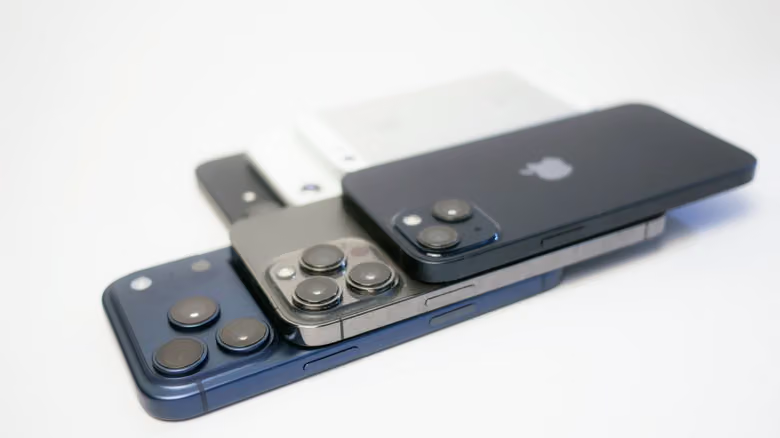
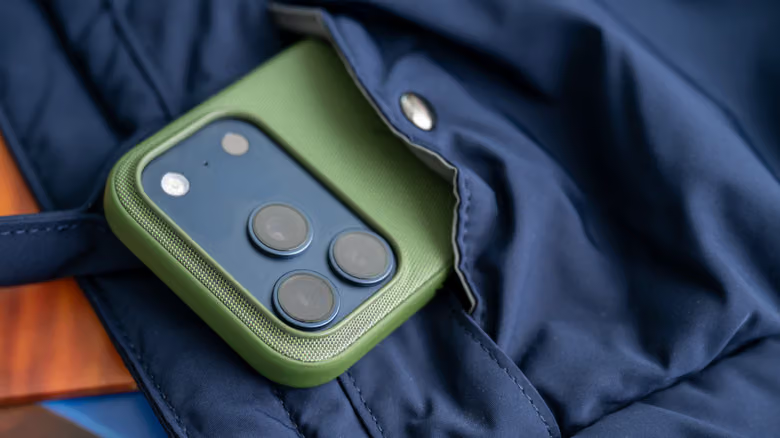
The camera numbers tell the most straightforward story: both the main and ultra-wide lenses on the iPhone 13 were 12MP; by the iPhone 17, that jumped straight to 48MP. The front-facing camera went from 12MP to 18MP and gained macro shooting along the way. Optical zoom on Pro models expanded from three focal lengths on the iPhone 13 Pro (0.5x, 1x, 3x) to five on the iPhone 17 Pro (0.5x, 1x, 2x, 4x, 8x), and 4K Dolby Vision recording jumped from 60fps to 120fps. Action Mode stabilization, introduced with the iPhone 14 generation, along with Center Stage auto-framing and simultaneous dual-lens recording added on the iPhone 17 lineup, are all features you can actually feel in daily use — real, tangible additions over these five years.
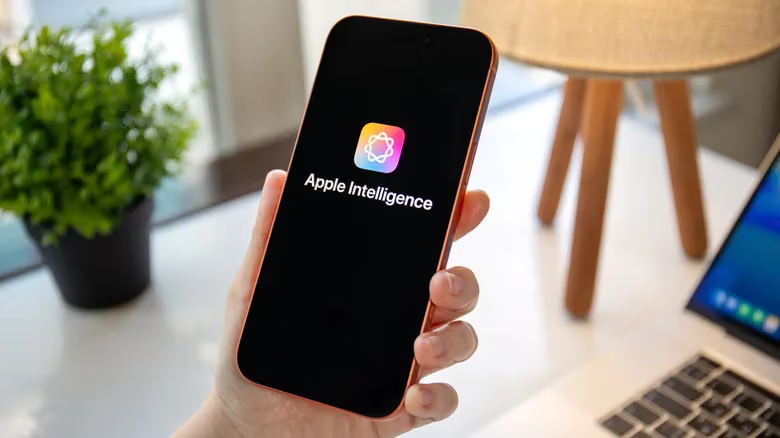
AI is where Apple has clearly lagged behind. Apple Intelligence didn't arrive until October 2024, launching with the iPhone 15 Pro/Pro Max and later models — writing tools, Image Playground image generation, and Siri's ChatGPT integration for handling complex requests all got added afterward. iOS 27, arriving in fall 2026, will bring a full AI overhaul to Siri, but some features will be exclusive to the iPhone 17 Pro/Pro Max and iPhone Air, like a customizable-tone Siri — continuing Apple's usual playbook of letting Pro models get first dibs before trickling features down to base models a generation or two later.
Satellite connectivity and crash detection debuted with the iPhone 14 in 2022, the same generation that also dropped the physical SIM tray in the US market for the first time. As for the broader lineup strategy, the iPhone mini hasn't made an appearance since 2021, with the iPhone Air stepping into the Plus model's slot in 2025. This article doesn't cover specific pricing or Taiwan release dates for each model — refer to Apple's official site for those details.