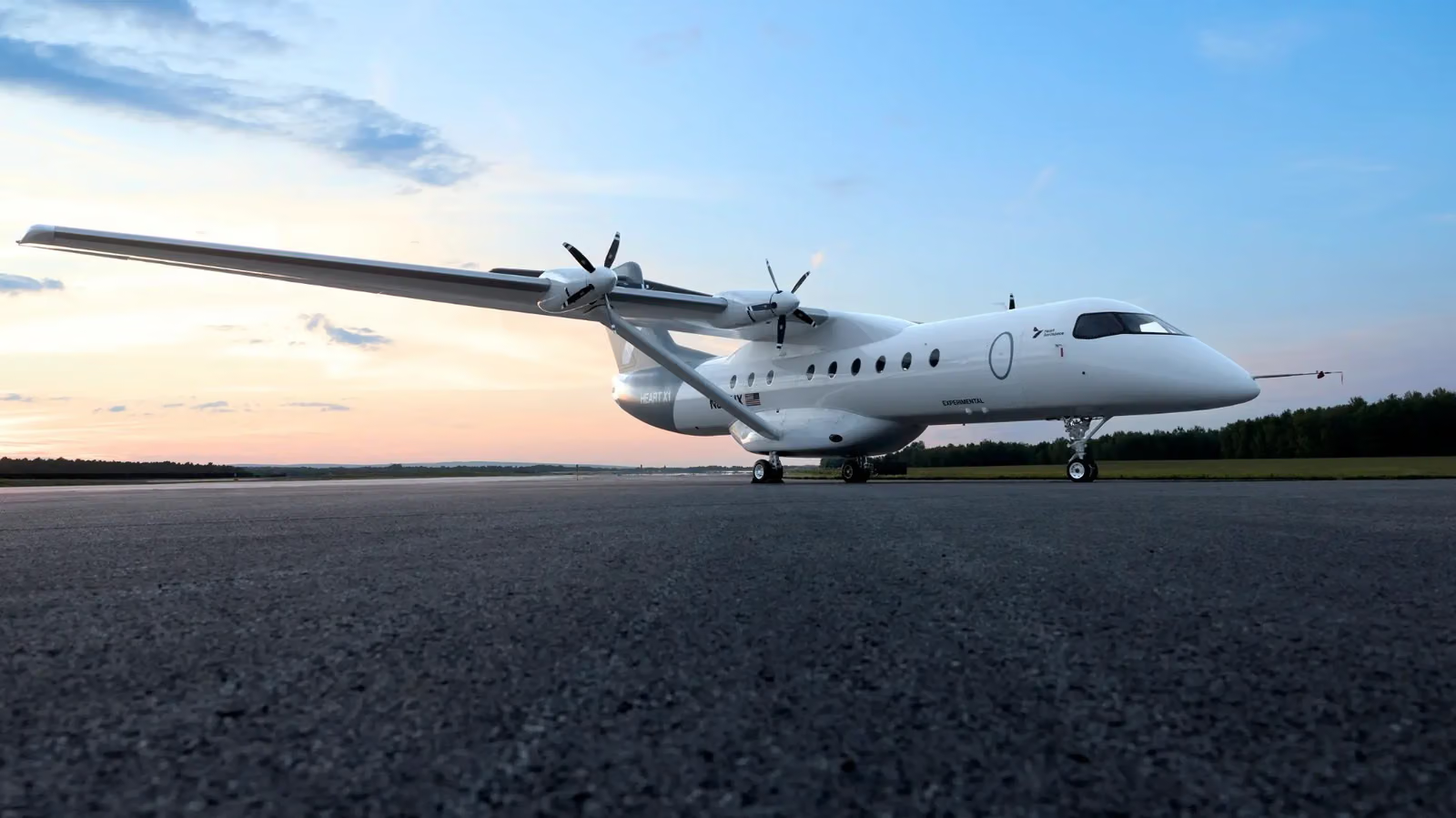
27 minutes, 1,100 feet, under $5 in electricity—that's the report card for what's currently known as the largest all-electric airliner ever to leave the ground. Heart Aerospace's demonstrator, the X1, completed its maiden flight in mid-August at Plattsburgh International Airport in New York State, running entirely on battery power without burning a drop of fuel.
The X1 is this Swedish startup's proof-of-concept aircraft, built to answer one question: can an electric plane actually fly, and fly steadily? The focus of this test wasn't passenger capacity or range—it was that electricity bill. From takeoff to climbing to 1,100 feet to landing, the entire flight cost less than $5 in power. Stack that against the fuel bills of current turboprop airliners, and the number speaks for itself. It's no wonder executives at United Airlines and Air Canada have both expressed interest, hoping to eventually bring electric aircraft into their fleets.
The X1 is just the starting point. What Heart Aerospace really wants to bring to market is its follow-up model, the ES-30—a 30-seat fixed-wing hybrid-electric airliner aimed at short-haul routes out of regional airports, the kind of routes currently dominated by turboprops like the Embraer ERJ. According to the plan, the ES-30 will manage 125 miles on pure electric power, extending to 500 miles with its hybrid system engaged. Heart's math is straightforward: electricity is cheaper than jet fuel, and electric motors require less maintenance and break down less often than traditional engines. Together, those two factors are what will actually win over airlines.
What's more intriguing is the ES-30's long-term roadmap. It's currently designed to be flown by a single pilot in its early phase, but Heart has already stated publicly that it hopes to eventually push the aircraft toward autonomous operation. Electrification first, automation close behind—that sequencing is worth watching.
Heart has set 2031 as the ES-30's target service date, an optimistic goal by the usual pace of aircraft development. Over that same timeline, companies like Boom Supersonic, Harbour Air, ZeroAvia, and Rolls-Royce are all pushing forward their own next-generation flight solutions. How far electric airliners can ultimately go still hinges on one bottleneck: whether battery energy density can get lighter and more powerful.