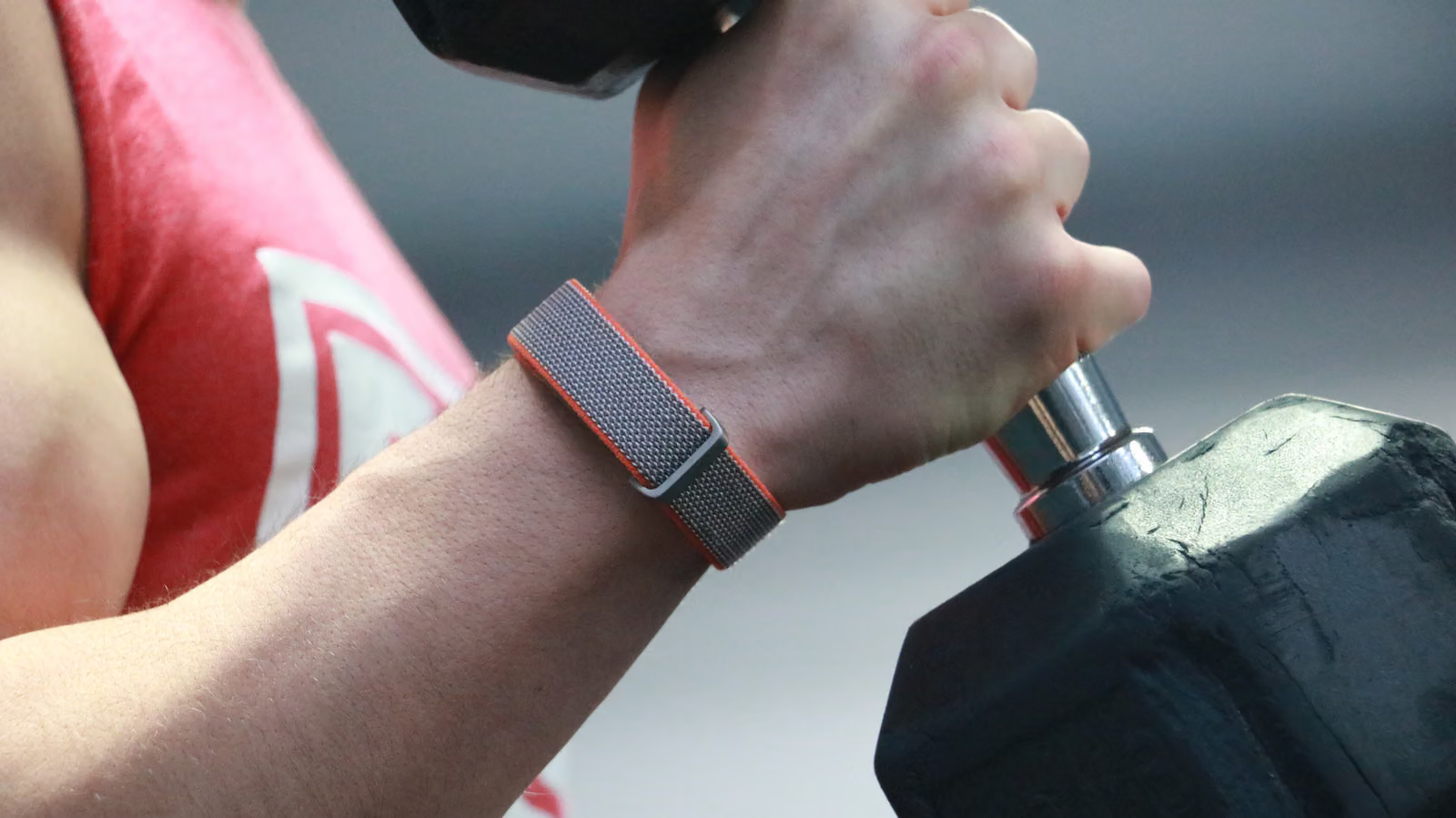
Screens aren't the point—that's the shared premise behind these two bands. Garmin Cirqa has just entered the market, going head-to-head with Google's Fitbit Air, which launched back in May. Both follow the "wear it and forget it" philosophy, yet they part ways on one crucial number: Cirqa costs $200, while Air is only $100. Whether that doubled price tag is worth it really depends on whose wrist the band ends up on.
The core features overlap almost entirely between the two—step counting, sleep tracking, workout detection, and heart rate health analysis are all present. Even the weaknesses match: both offer 50-meter water resistance, only sufficient for light swimming, and both require a phone connection for GPS positioning. What actually separates them comes down to specific details measured in millimeters and milliamps.
Battery Life, Size, and a Single Button
On battery life, Fitbit Air lasts about seven days, while Cirqa claims ten. Full charging time is roughly the same at 90 minutes for both, but Air has fast-charging support—just five minutes gets you a full day's worth of power back. In terms of size, Air is noticeably more compact, weighing just 12 grams including the band, with dimensions of 17 x 34.9 x 8.3 mm. Cirqa, on the other hand, weighs 20.7 grams (21.2 grams for the L-XL band version) at 27 x 47 x 9 mm. If you want something completely unnoticeable while sleeping, Air has the clear edge.

Cirqa adds a physical button on the side, letting you manually start tracking a workout without pulling out your phone to select an activity from the app. Air, by contrast, relies entirely on automatic workout detection. That button might seem like a small detail, but it's actually the difference between "starting the moment you want to" and "waiting for the system to catch up."
Two Different Approaches to Subscriptions
Garmin Connect+ costs $7 a month, though most of the analytical data is already built into the device itself—the subscription mainly unlocks things like breathing guidance and customized training plans, making it feel more like a nice-to-have bonus. Google Health Premium runs $10 a month and unlocks a much larger suite of features, including training plans, mindfulness exercises, more detailed sleep tracking, and so-called "Active Insights." However, the entire service leans heavily on Gemini, so if you're not into chatting with an AI coach, it might feel like overkill.
The two also take different approaches when it comes to metrics. Cirqa offers four key indicators—Training Status, Body Battery, Training Readiness, and Fitness Age—leaning toward deep training analysis. Fitbit Air, meanwhile, calculates Cardio Load on a weekly basis, paired with a Daily Readiness score that combines sleep and exercise data into a more general snapshot of your daily state. The fact that Google named its AI coach "Health Coach" rather than "Exercise Coach" pretty much says it all about their intended focus.
Garmin Cirqa touts support for over 80 trackable sports, clearly targeting serious training enthusiasts, while Fitbit Air leans more toward overall health management, making it friendlier for people picking up a fitness band for the first time. Factor in three years of subscription costs, and the price gap only widens further in Garmin's direction over time—but both bands still come in cheaper than Whoop, whose lowest annual membership in the US already starts at $199.