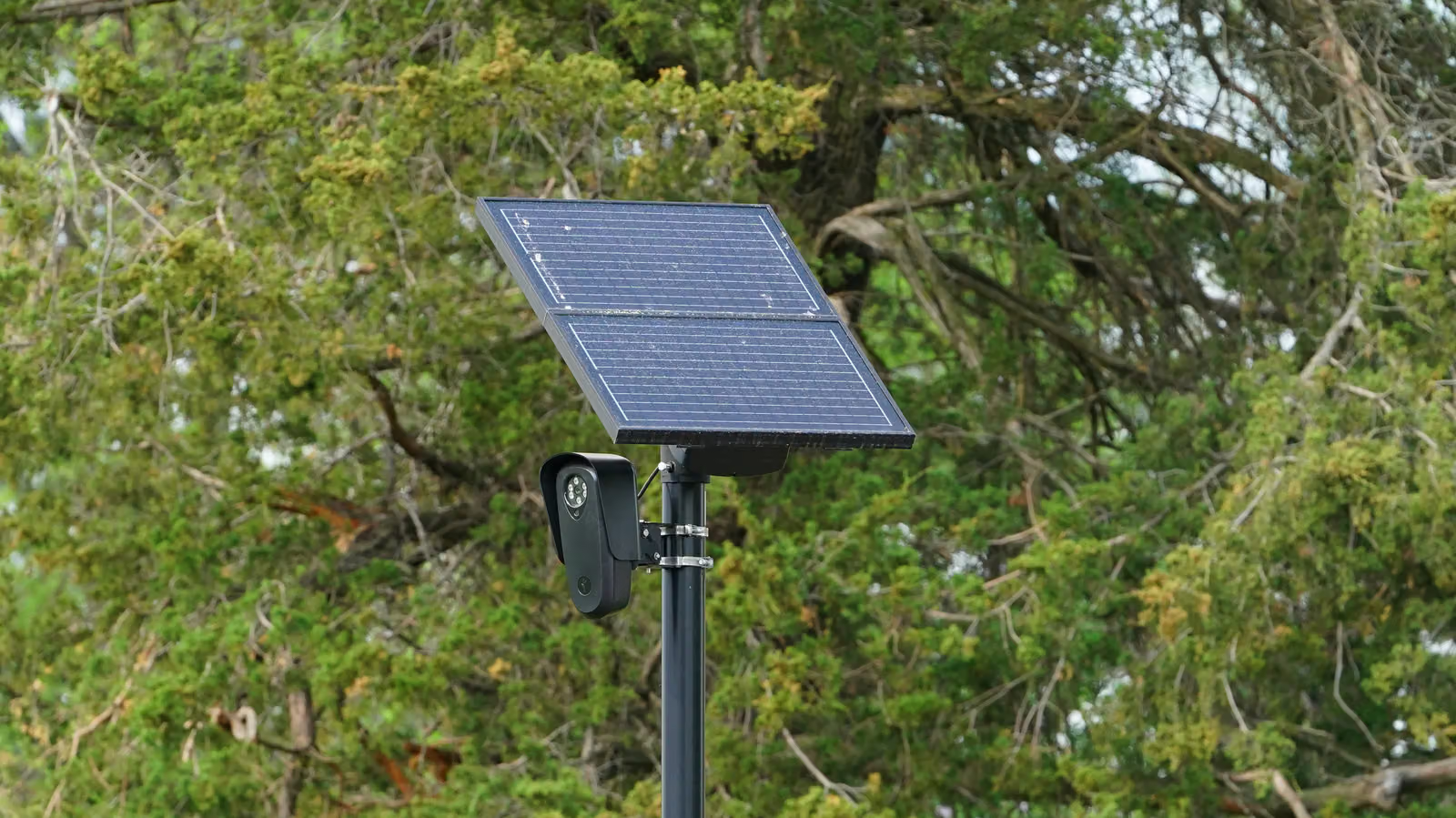
One morning, a small-town police department in Minnesota discovered that every Flock camera in town had vanished overnight. The department later announced it wouldn't be reinstalling them. This wasn't an isolated incident—across the US, there's been a steady stream of reports of Flock license plate readers being vandalized, torn down, or simply stolen, and law enforcement in Los Angeles has already ended its partnership with Flock. This is the backdrop against which the company arrives at today's announcement.
On August 13, Flock Safety rolled out a new set of rules with a clear goal: make it harder for police to misuse the system for personal reasons. The Audit Assistance feature, previously optional, is now mandatory—the system will flag "anomalous search behavior" and lock suspicious accounts until a supervisor reviews them. Officers will now be required to enter a case number for every search, theoretically blocking personal lookups like checking on an ex or a neighbor—though supervisors can still manually override this in certain situations, leaving a built-in loophole. License plate data retention has also been cut from 30 days to 7 days, but only for new customers; existing customers can keep whatever retention period was "approved through a democratic process," with no specifics given on how long that actually is.
Founder Garrett Langley's tone this time is worth noting. He once called a website that tracks the locations of Flock cameras "terroristic," later apologized for the remark, and has since noticeably softened his stance. He told The Verge: "I think we got this wrong, and it should have been mandatory." He added that it took him longer than he expected to fully grasp the real-world impact his company has had. Flock will turn ten next year, and similar complaints about officers abusing the system have been documented since at least 2021—so this update isn't exactly early.
But what this new rule set actually fixes is the easier-to-articulate, easier-for-PR-to-clean-up problem: an officer using company systems to spy on an ex. The accusations from the ACLU and the Electronic Frontier Foundation have never stopped there—they argue Flock has consistently undersold to the public just how much its system can actually do beyond simple license plate recognition. Cases cited include police using the cameras to track people legally purchasing marijuana across state lines, and instances where the system was reportedly used to track a woman seeking abortion care. As for the controversy over Flock data being shared with ICE, Langley's response was: "If the state of Texas wants to enforce immigration law, they're going to do it whether or not they have Flock"—effectively shifting responsibility back onto law enforcement itself, without committing to cutting off the data sharing. At least 24 people have died in ICE custody in the US this year—a figure not directly tied to Flock in available materials, but one that helps explain why the public is especially sensitive to where this kind of data ends up.
In other words, this update tightens up who can search what—it doesn't touch who ultimately gets the data or what they do with it. The Minnesota town that chose not to reinstall its cameras may have already given the most direct answer to the whole situation.