The timing is what makes this story sting. On Thursday, Chinese Vice Premier He Lifeng held a video call with US Treasury Secretary Scott Bessent and Trade Representative Jamieson Greer. China's Ministry of Commerce described the exchange as "candid, in-depth, and constructive," part of the groundwork for a planned meeting between Trump and Xi in September. Then, the very next day, the US added 43 Chinese companies to the Uyghur Forced Labor Prevention Act (UFLPA) Entity List—a 30% jump in one go, the largest single expansion of the list to date.
The list spans industries the US flags as high-risk for enforcement: aluminum, apparel, copper, cotton, tomatoes, and their downstream products. Two names on it should catch the attention of anyone in fashion: Fujian Septwolves Industry Co., Ltd.—the manufacturing arm behind one of China's top menswear brands—and Henan Tongzhou Cotton Industry, a major processing and trading company for cotton fiber, yarn, and finished garments. This marks the first time a Septwolves-affiliated entity has been named, and it's a first for the list too—directly touching a consumer-recognizable apparel brand rather than staying confined to raw materials.
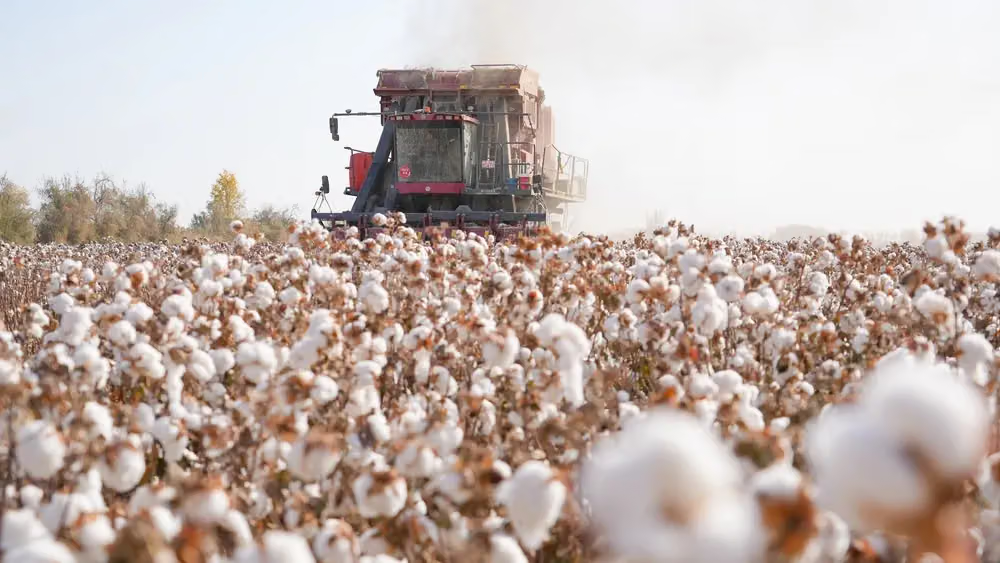
Beijing's response was far sharper than its reaction to tariffs. The same week, the Trump administration replaced an expiring 10% global tariff with a 12.5% rate under Section 301 of the Trade Act of 1974, and China's Ministry of Commerce responded relatively mildly to that move. But on the UFLPA expansion, the ministry didn't hold back, calling it "a textbook case of economic coercion" and, through state media, accusing Washington of "seriously infringing on the legitimate rights of the companies involved" and "severely disrupting the stability of global industrial and supply chains." The China Cotton Association also issued a statement pushing back, stressing that mechanized cotton harvesting in Xinjiang now exceeds 90%, that the industry "has always followed a path of market-oriented, modernized development," and that the US allegations "lack any factual or legal basis."
Support for the expansion on the US side came from a different direction. Abdulhakim Idris, executive director of the Uyghur Research Institute, said Monday that China's ability to "artificially suppress manufacturing costs is partly built on forced labor imposed on Uyghurs," putting law-abiding companies at an unfair disadvantage. Rep. John Moolenaar (R-MI), chair of the House Select Committee on the Strategic Competition Between the United States and the Chinese Communist Party, said the move sends a message to Beijing that "we will not turn a blind eye to its genocide and human rights abuses."
One line in the China Cotton Association's statement stands out: it emphasized that China has "the world's most complete cotton textile supply chain, a massive domestic market, and an increasingly diversified international market presence"—a tone of confidence rather than defensiveness. But that confidence still came paired with a pledge to "continue safeguarding the legitimate rights of Chinese cotton textile enterprises," suggesting this standoff isn't winding down anytime soon. As for the concrete impact of the expanded list on procurement and supply chains tied to Septwolves-affiliated firms, no further details have surfaced yet.