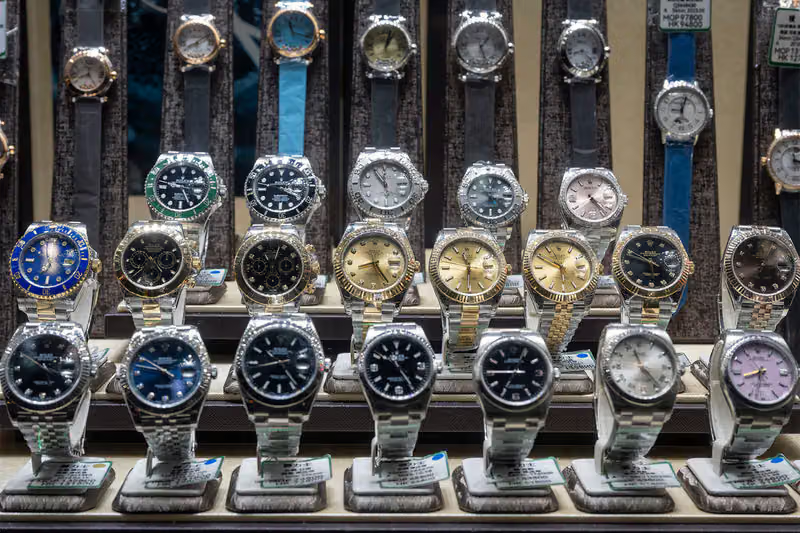
The days of a single steel Daytona commanding insane premiums and everyone scrambling for sports watches on the secondary market — that era is officially over. According to Chrono24's latest report, Rolex's share of platform sales has slid from its 2022 peak of 44% down to 30.5%, settling back to pre-pandemic levels. This isn't a crash. It's a cooldown.
Even so, the throne hasn't changed hands. In Q2 of this year, Rolex still commanded 31% of total sales on the platform, holding a comfortable lead — Omega trailed at 11%, and Patek Philippe brought in just 6%. The gap remains massive. Where things are actually loosening up is at the very top end — watches priced above $20,000 — where Patek Philippe, Audemars Piguet, and Vacheron Constantin are starting to chip away at Rolex's dominance. But in the $10,000-to-$20,000 mid-tier bracket, Rolex remains an absolute juggernaut, capturing 61.4% of transaction volume. The Submariner, GMT-Master II, and steel Daytona are still the face of this price segment.
What's more interesting than the market share numbers is how the buyer base is shifting. Collectors under 30 are still spending the most on Rolex — roughly 34% of their budget — so neither their numbers nor their loyalty has dropped off. But their tastes are diversifying fast, and there's a clear pivot away from speculation-driven sports watches toward more understated dress pieces. The result: the Datejust has quietly become the big winner. This classic model is now Rolex's top revenue-generating line on Chrono24, accounting for 28% of the brand's total sales on the platform. Once dismissed as an "entry-level" piece, the Datejust has instead become the younger generation's first step into the brand — and one of the few names actually gaining ground amid the broader cooldown.