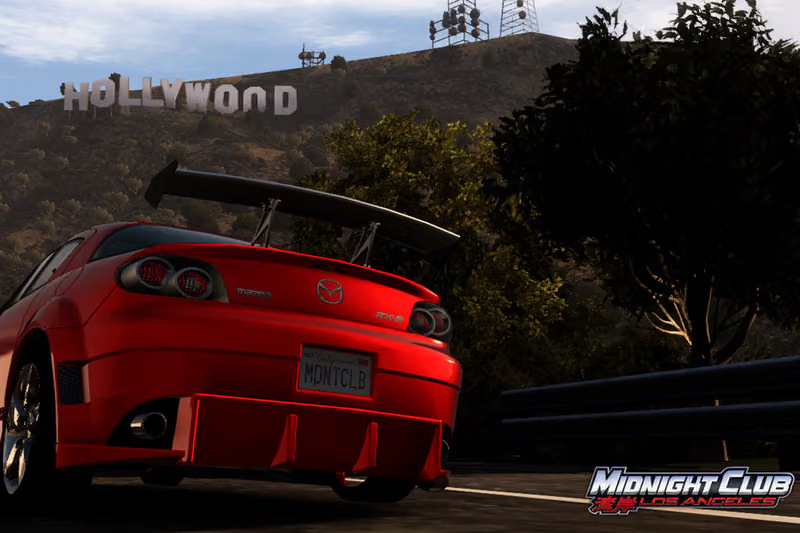
London's streets had already been mapped out, but the cars never got to hit them. Former Rockstar San Diego senior designer Kris Roberts recently sat down with Insider Gaming to unpack the inside story of how Midnight Club 5 got cancelled mid-development. The game had already reached the prototype stage for a London-set map, but the entire project was axed straight from the New York headquarters, with resources funneled instead into supporting Grand Theft Auto and Red Dead Redemption.
Roberts didn't mince words about it: New York executives treated this four-entry-deep racing franchise like a "red-headed stepchild"—a second-tier project without the prestige or awards weight that comes with the studio's flagship titles. The friction had actually been building since 2008's Midnight Club: Los Angeles—originally slated for an early 2008 launch, the game got pushed all the way to late October. In an era before digital distribution was widespread, that kind of delay created real financial strain and cracked the trust between the San Diego team and New York leadership, with creative control becoming an ongoing tug-of-war between the two sides.
The irony is that the numbers didn't back up New York's decision. Roberts pointed out that players actually spent more time with this street racing game than they did with either of its direct rivals, Need for Speed and Burnout. But that track record barely registered at headquarters, because the sales figures never came close to touching flagship-tier ceilings. The company's strategy was crystal clear: only bet on projects guaranteed to become blockbusters. According to Roberts, Take-Two Interactive's hardline stance on long-tail products and smaller franchises hasn't changed much even today.
Once Midnight Club 5 went down, San Diego's racing team was dismantled almost immediately. Some members were reassigned to support internal RAGE engine development or pulled into building out multiplayer for the original Red Dead Redemption, while others left the company entirely during a round of layoffs in 2010. This team actually traced its roots back to racing games like Midtown Madness before eventually folding into the Rockstar umbrella—looking back now, cutting the fifth entry effectively erased a significant chapter of early-2000s street tuner car culture from the timeline for good.