Ellen Mirojnick says her ideal outcome is one where audiences walk out of the theater without remembering the costumes at all. Coming from the person who just finished costume design for Christopher Nolan's new film The Odyssey, it sounds like a paradox—but it's the genuine logic behind her work. The film is already in theaters in the US, with a Japan release date set for September 11, marking Mirojnick's second collaboration with Nolan following Oppenheimer.
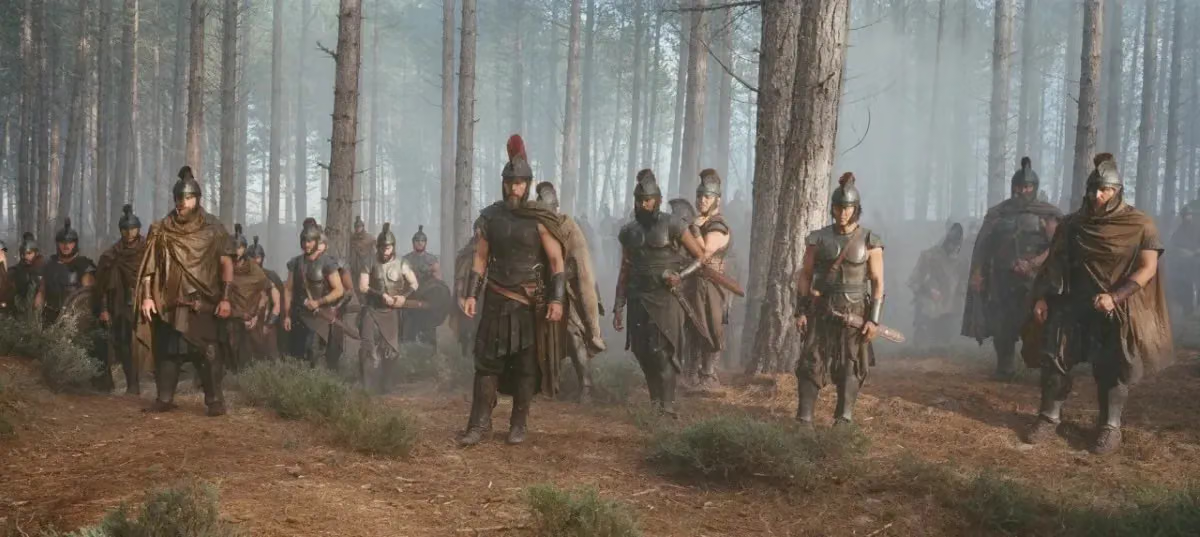
In September 2024, the director and his wife and producing partner Emma Thomas approached her with a script simply titled The Odyssey. After a few hours of discussion, Mirojnick understood exactly what Nolan was going for: not fantasy, but realism. Yet this wasn't the same kind of meticulous period-accurate realism as Oppenheimer—The Odyssey isn't tethered to a specific historical era. Her approach was to start with the text, then research history, and finally move into myth, aiming for a sense of "timelessness"—an ancient quality that transcends any single era, rather than something that belongs behind museum glass.
Matt Damon's Hero: Costumes That Hide Change, Not Display It
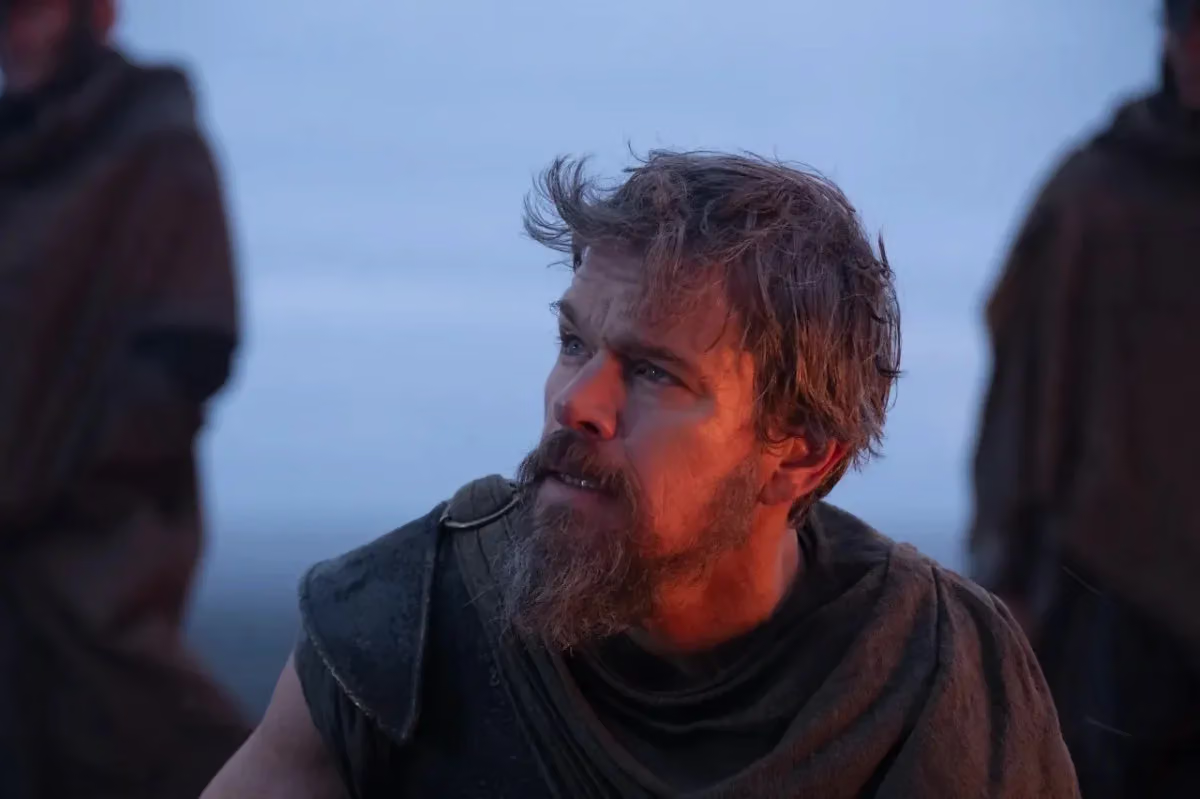
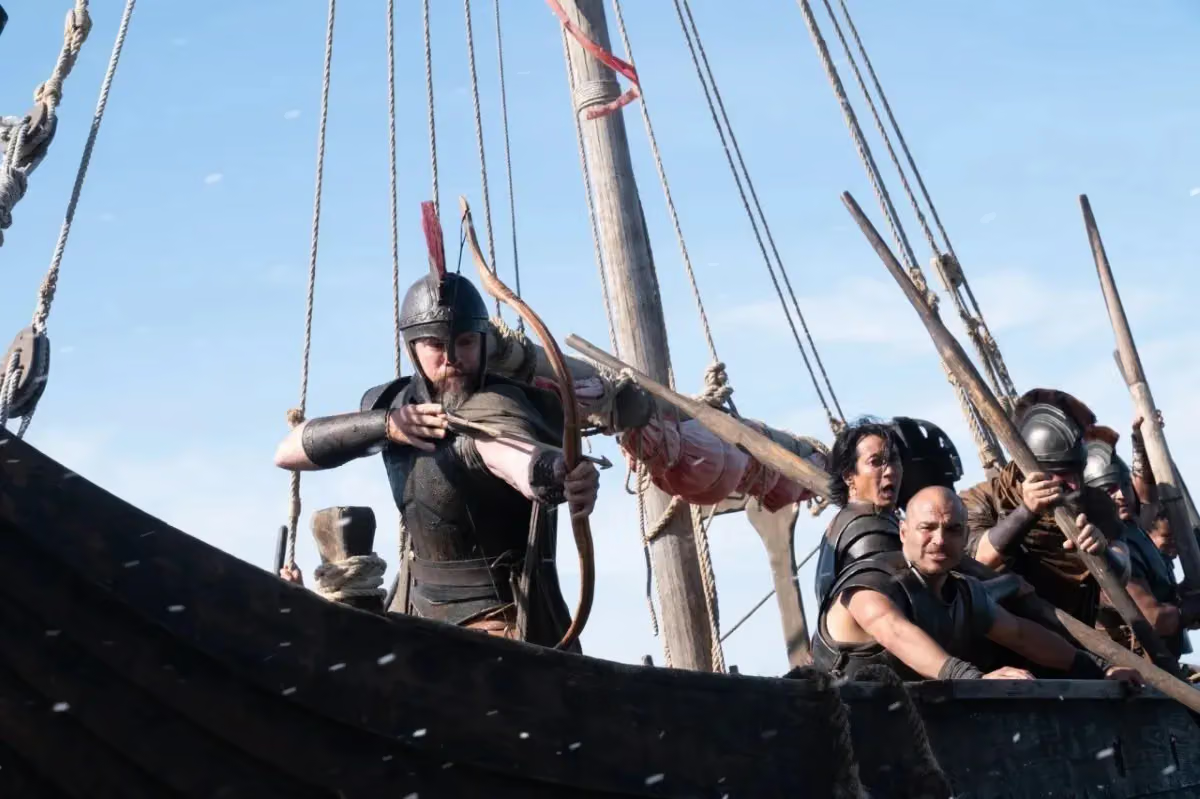
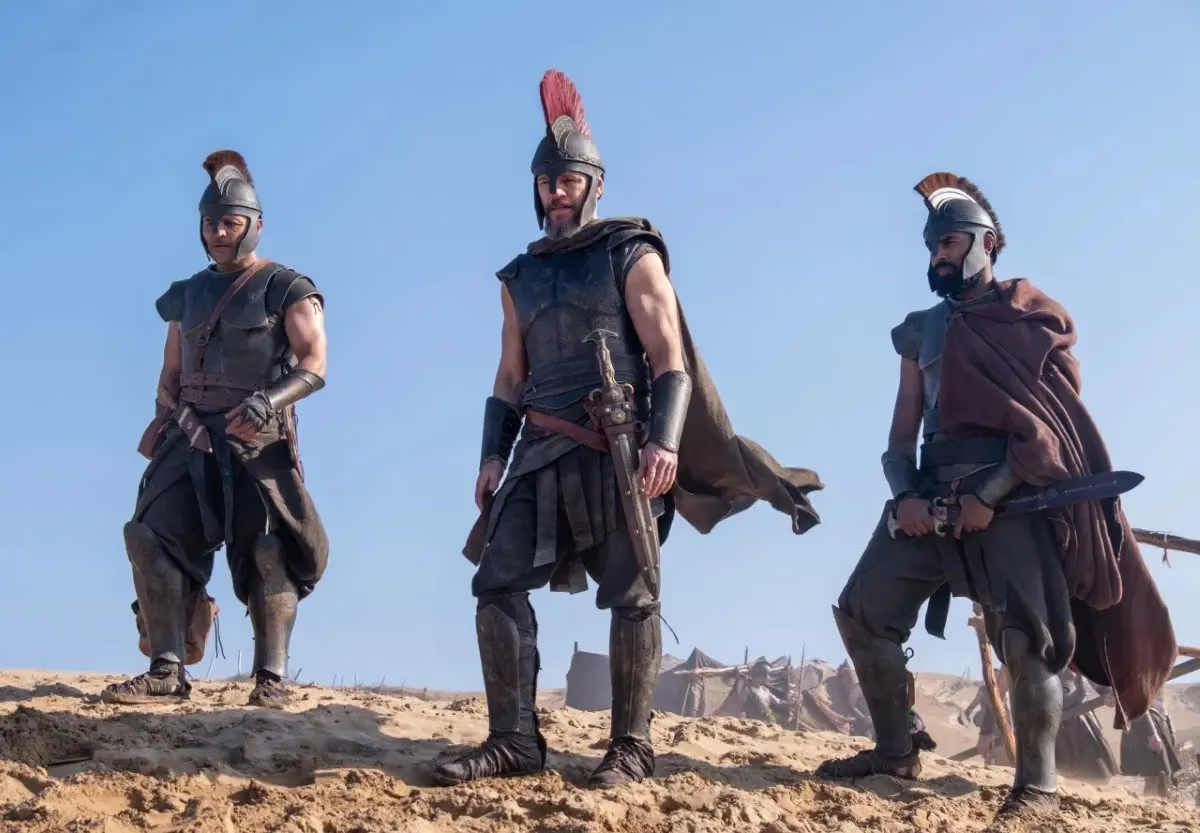
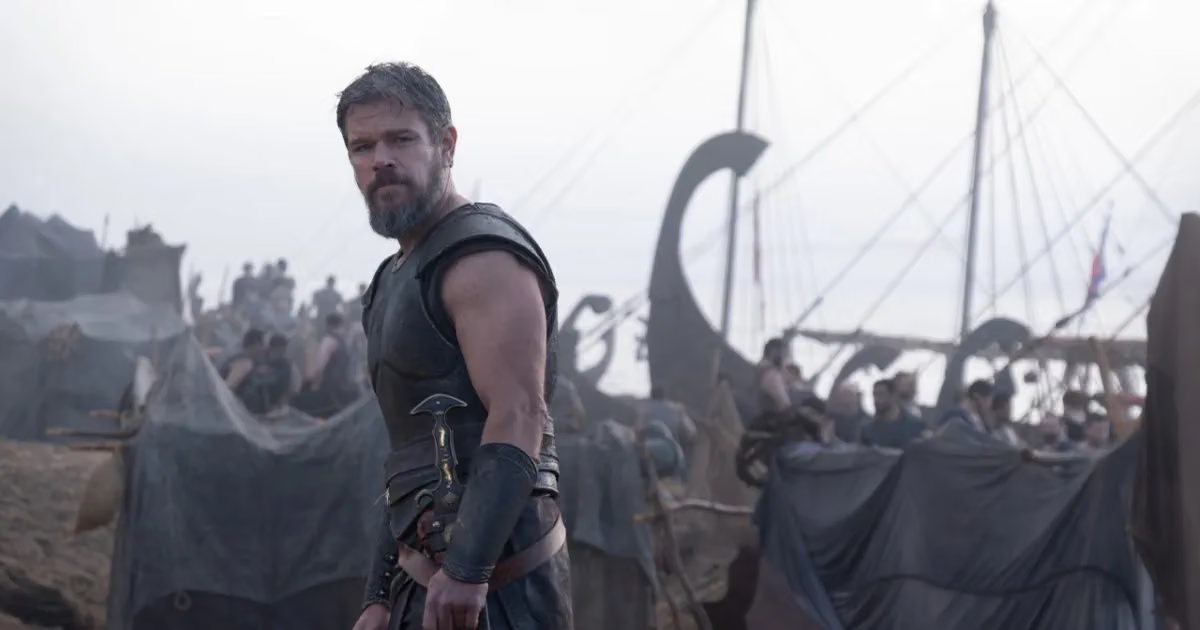
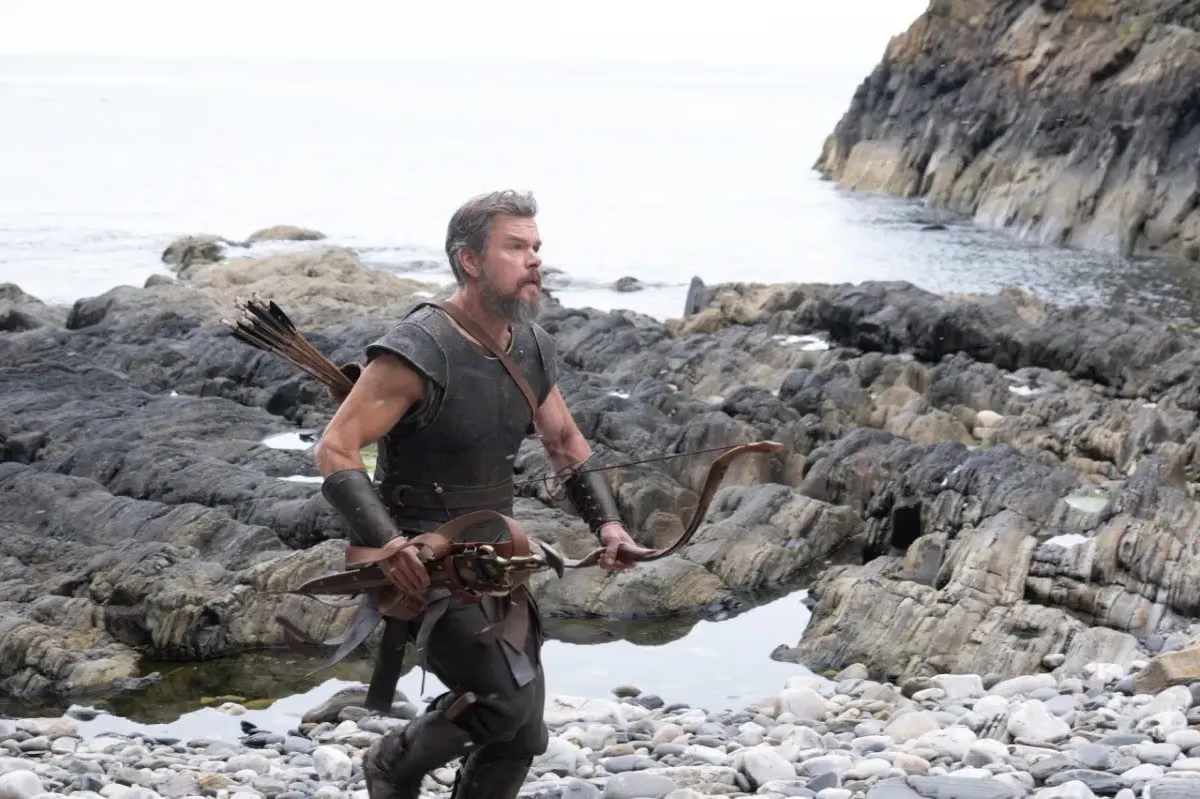
Matt Damon plays Odysseus—a hero who ages, disguises himself, adapts, and survives precisely because he changes, rather than a protagonist who stays constant throughout. Mirojnick wanted the costumes to convey that transformation without the audience consciously registering it. Her key concept was "minimalism"—leather, bronze, and linen combined in different ways, with the same simple silhouette taking on multiple forms to express strength and vulnerability, the exhaustion of shedding armor, and the wear left behind by a long journey.
Zendaya as Athena, Anne Hathaway as Penelope: Two Kinds of "Quiet Power"
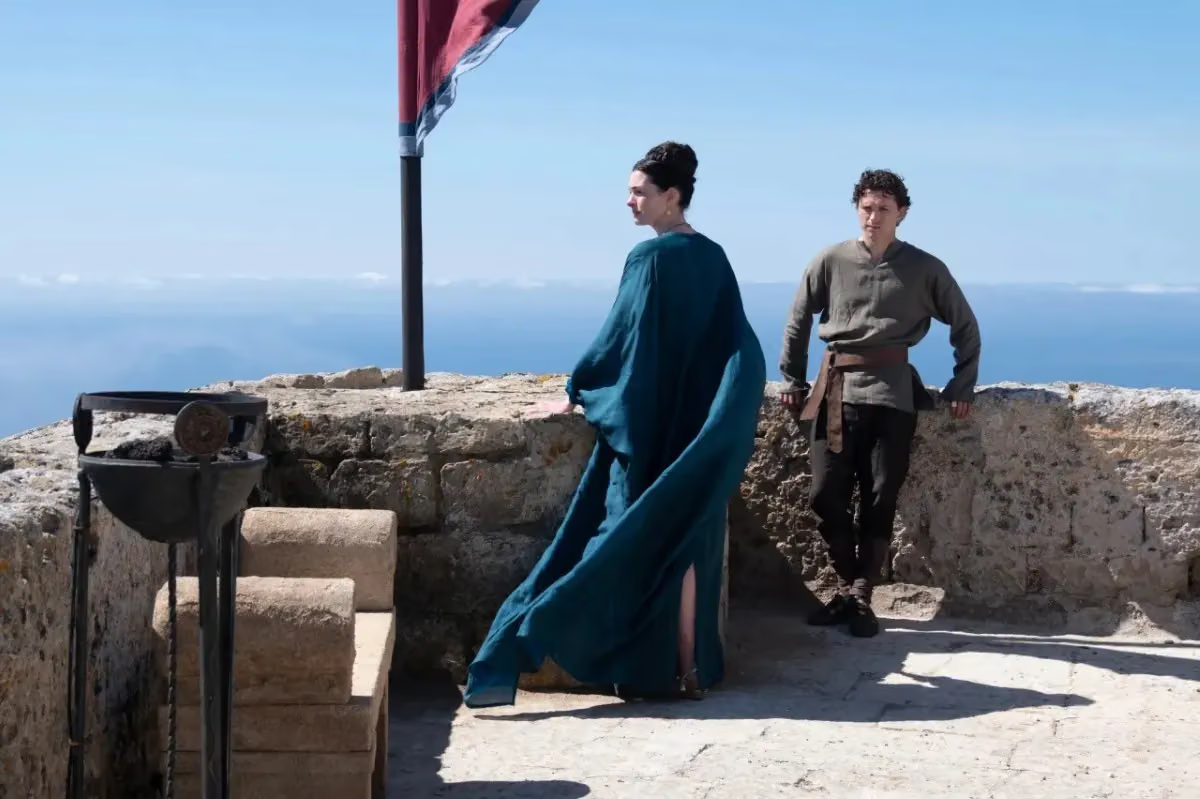
The goddess in the film is played by Zendaya as Athena. Nolan's direction was clear: the goddess had to be a character capable of existing independently in the human world, not some ethereal figure floating above it all. Athena has very few lines, mostly working behind the scenes to move the story forward, so Mirojnick built intellect and strategic sensibility into the costume—layers of linen draped in ways that express emotion through movement, allowing her to blend naturally into different settings.
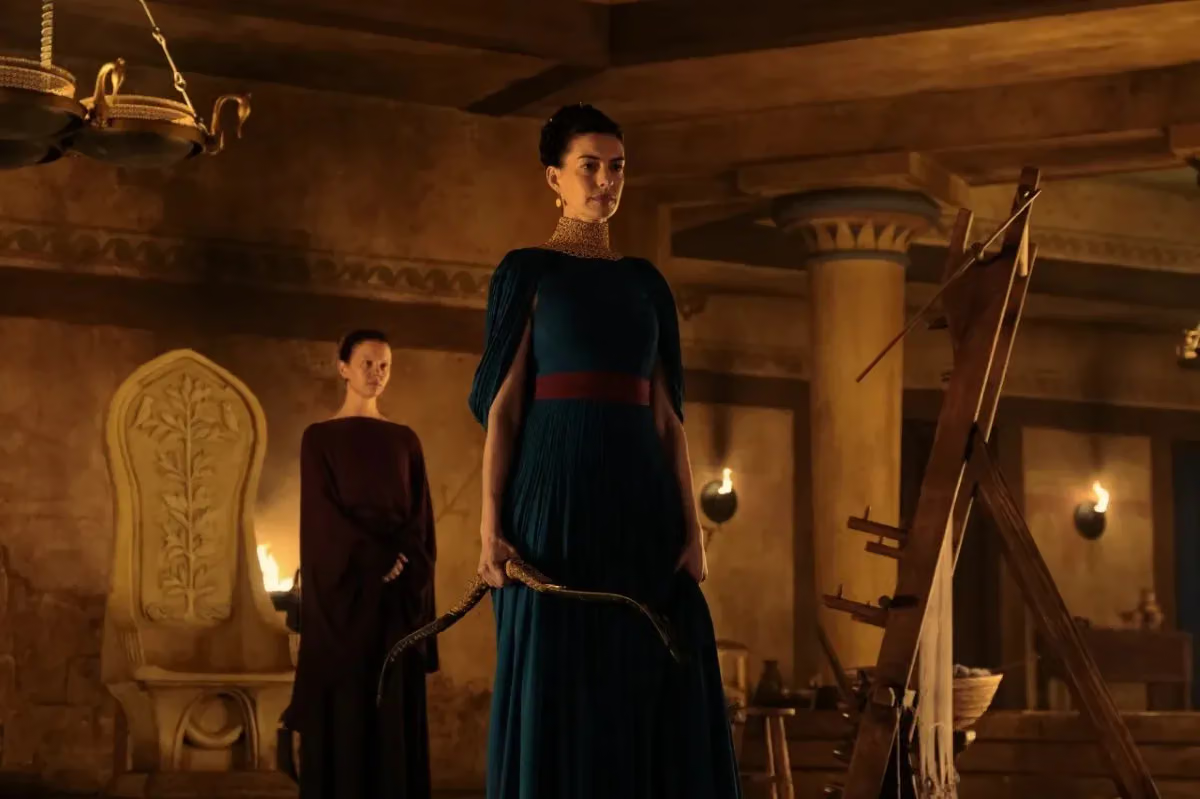
Anne Hathaway plays Queen Penelope, taking a different path entirely. She's not an action-driven character but a quiet strategist, and Mirojnick wanted to weave memory, ritual, self-restraint, and the passage of time into her costumes. Penelope's wardrobe uses jewel tones symbolic of the royal house of Ithaca, and given her identity as a weaver, fabric itself carries an inherent sacredness in her character—texture and drape become the language of her quiet strength. Toward the story's climax, in the scene where Penelope announces that whoever can string the bow will win her hand, she wears a deep teal, body-conscious dress—Mirojnick describes the neckline as a shield protecting her, with the fine pleating serving as another layer of armor.
Meanwhile, the suitors who flock from across the land to compete for her hand are designed as a rabble of opportunists. Among them, Robert Pattinson's Antinous stands out as the film's chief villain, with "excess" as the defining concept—driven purely by desire, he seizes others' wealth and power as if entitled to it, and his overly ornate styling foreshadows the dark age about to descend.
Filming spanned land and sea, the mortal world and the divine realm, with multiple locations shooting simultaneously—Mirojnick describes the period as feeling like working on seven films at once. Most costumes were made on location, with each site requiring its own dedicated team of cutters, tailors, and finishers. The remote, rugged locations imposed real constraints, but they also gave the final costumes a raw, tactile authenticity.
Back to that idea of wanting audiences to not even see the costumes—Mirojnick watched the finished film twice herself and says she barely noticed her own designs. For her, that's the truest mark of success.