
The Ray-Ban Meta smart glasses have picked up a rather unflattering nickname online—"pervert glasses." Launched in 2023 through a partnership with EssilorLuxottica, the glasses let wearers ask an AI "what is this" while looking at a scene, a feature that's reportedly been misused by some to secretly photograph strangers. Meta Platforms Technologies, the entity behind Meta's R&D and hardware patents, recently unveiled a new patent showing that what these glasses are gearing up to do goes well beyond simply "recording what you see."
The patent outlines a four-stage process. After the camera captures live or recorded footage, it's first passed through a facial recognition layer that identifies exactly "who" is in frame—not just "someone." Next, a motion detection layer reads what these people are doing, such as picking something up, leaving a room, or gathering in a group. Finally, the system packages the identified results into separate media clips, each tagged with the person, the action, or both.
What really pushes this patent beyond "smart surveillance camera" territory is its assistant interface. Diagrams in the patent show users querying their phone or headset in natural language, with the system pulling together an answer directly from the tagged clips—no need to rewind and dig through footage yourself. The diagrams also map out both server-side and device-side processing flows, with a natural language understanding module linked to this "clip generator."
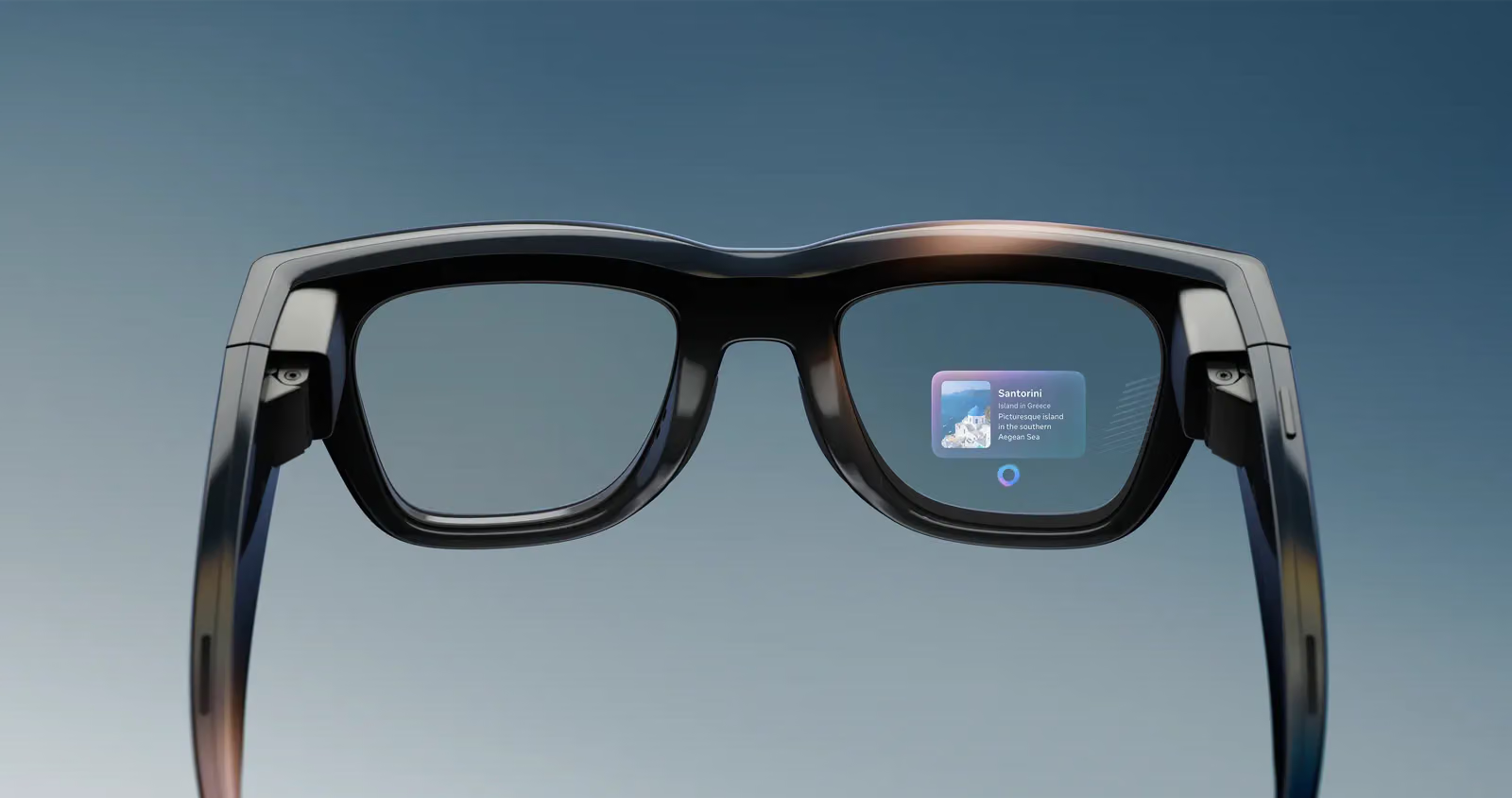
The controversy isn't the technology itself—it's that this system can identify and log specific people's faces without any consent from those being recorded. That's exactly the concern raised earlier by Democratic senators when questioning Meta about its smart glasses: real-time facial recognition could expose people to risks of stalking and harassment. Reports have already surfaced of Ray-Ban Meta wearers secretly filming strangers in public, and of outside contractors reviewing private footage. If this facial-recognition capability actually ships, a camera-equipped pair of glasses that can call out a stranger's name by sight would widen the gap between Meta's framing of a "helpful assistant" and what the technology is actually capable of doing.
The patent currently sits at "Ready for Examination" status and has not yet been approved—Patentlyze rates its approval odds as moderate. A published patent only means the idea is on record; there's still a long road between that and an actual, shipped feature.