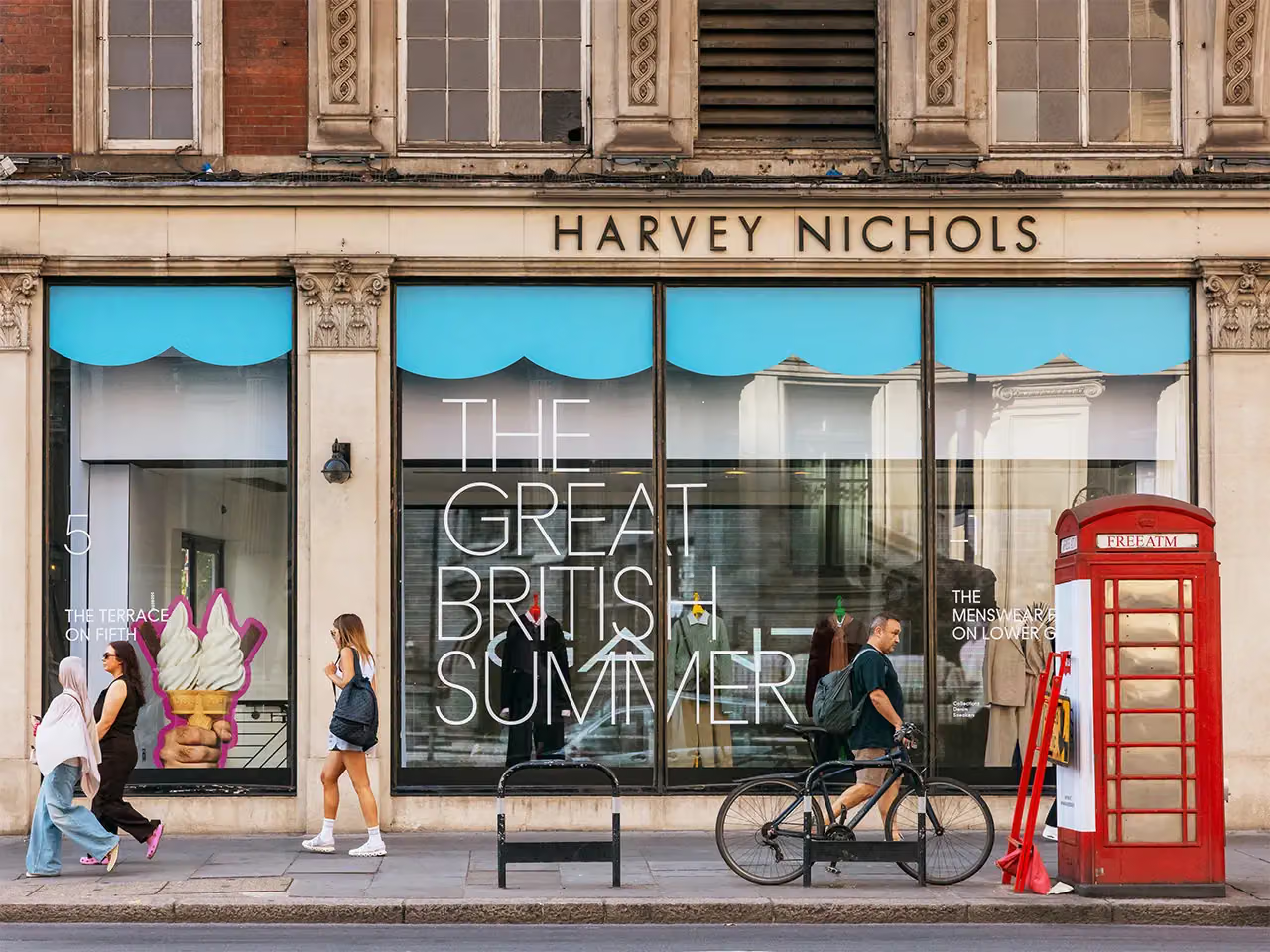
Forty million pounds bought Harvey Nichols' six UK stores, its e-commerce platform, and overseas licensing rights — a price so low that even Mike Ashley himself described the business's condition as a "death spiral." The buyer is his Frasers Group, an empire built on discount sportswear and anchored by Sports Direct. The acquisition, negotiated through administration, may look shrewd on paper, but the industry's real worry isn't the price tag — it's who's writing the check.
This isn't Frasers' first attempt at crossing into luxury. Back in 2019, the group's Flannels brand opened a flagship on Oxford Street, aiming to become the next great luxury department store. It failed to draw crowds or convince many heavyweight brands to sign on. Even worse was Matches Fashion: less than three months after Frasers acquired the luxury e-commerce site, it collapsed into administration, leaving a string of independent designer labels unpaid and nearly bankrupt in the process. That history is the most unsettling backdrop to this latest deal.
Harvey Nichols' own situation isn't rosy either. Over the past six years, the retailer has racked up £190 million in cumulative pre-tax losses. But it's also carrying nearly two centuries of history — founded in 1831 as a drapery shop, it became a genuine piece of pop culture during its heyday in the '80s and '90s, immortalized in Absolutely Fabulous, and it still occupies some of London's most coveted retail real estate between Sloane Street and Knightsbridge. The fact that Loewe, Valentino, and Gucci still choose to keep their floors there is itself a vote of confidence.
The problem is the store hasn't kept pace with how retail has evolved. Selfridges turned shopping into theater; Harrods went all-in on Middle Eastern high-net-worth clientele with private shopping suites and exclusive collections. By comparison, CEO Julia Goddard — who parachuted in from Alexander McQueen in 2024 — and creative director Kate Phelan had actually already started rebuilding momentum: renovating the jewelry and homeware displays on the London flagship's ground floor, reshooting the brand's advertising, and locking in an exclusive partnership with LA beauty retailer Violet Grey. These changes were already underway before the acquisition — they're not something Frasers brought to the table.
Frasers CEO Michael Murray has already signaled that "difficult choices" lie ahead, hinting that some regional stores may face consolidation or closure. Getting Harvey Nichols back into the black almost certainly requires that step. The real question is whether Murray is willing to keep people like Goddard and Phelan around and let them keep doing what they've already been doing — because if this just turns into a repeat of Flannels' ambition or Matches' recklessness, this 200-year-old institution may not survive much longer.