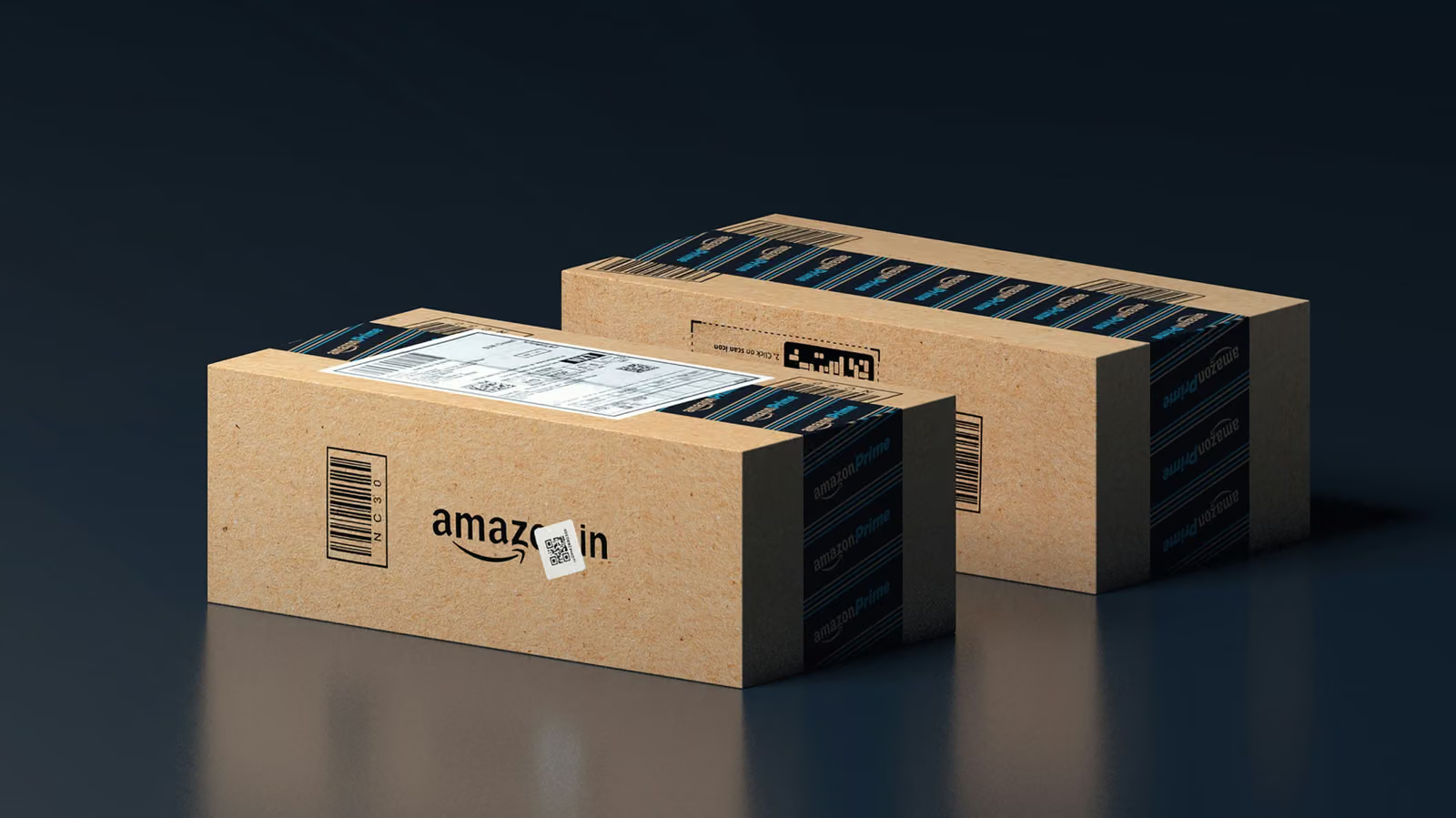
If a company requires you to wear its uniform, drive its branded van, follow its pre-set routes, and even uses drones to watch you before a planned strike—can you really call yourself an "independent business owner"? New Jersey Attorney General Jennifer Davenport's office doesn't think so. On August 4, her office filed an antitrust lawsuit against Amazon, accusing the company of abusing its "dominant buyer power" over contracted delivery drivers.
Amazon began building its Delivery Service Partner (DSP) network back in 2018, outsourcing delivery operations to third-party contractors classified as independent operators. But according to the complaint, beyond simply supplying the packages, Amazon also provides uniforms, branded delivery vans, and assigns routes—while monitoring drivers through cameras, AI systems, and even drones. The lawsuit specifically notes that some drivers who planned strikes or participated in union organizing were reportedly tracked by drones.
An even more pointed allegation concerns hiring practices: the complaint states that "some employees who supported union organizing at Amazon delivery stations were later denied employment or terminated by other DSPs within the network." In other words, even after switching contractors, a driver's history of union activity appears to follow them.
Davenport's office emphasized that this marks the first-ever state-level lawsuit targeting alleged monopsony conduct in the U.S. The complaint argues that Amazon is the sole buyer of DSP services, leaving these contractors with no choice but to accept its pricing and terms—resulting in driver wages that are "significantly lower" than comparable positions at USPS, UPS, and FedEx.
Amazon spokesperson Steve Kelly flatly denied the allegations, telling Engadget that "this complaint is entirely disconnected from reality." He stressed that DSPs are independent business owners who make their own decisions on hiring, fleet management, and capacity planning, and are free to work with companies other than Amazon. He also cited route performance data showing that the vast majority of delivery routes are completed on time or ahead of schedule, and criticized the Attorney General's office for holding "a press conference instead of a conversation," noting that it had not engaged with Amazon on the core allegations before filing suit.
This isn't the first time Amazon's driver programs have come under scrutiny. Its separate Flex driver program was previously investigated by the FTC for withholding $61.7 million in driver tips, ultimately settling with regulators and repaying the full amount to drivers. Should New Jersey's lawsuit succeed, it would mark the first time the blurry line between "outsourcing" and "control" is put on trial under antitrust law.