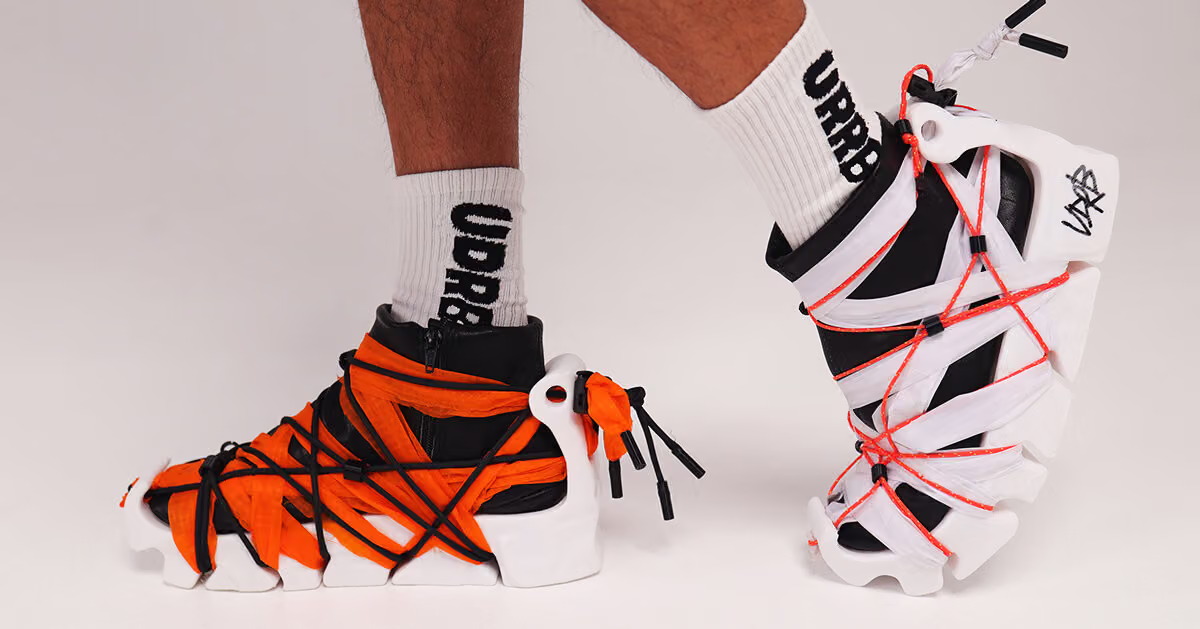
Most sneakers are built with glue: uppers, soles, and linings are all bonded together layer by layer, which means a single damaged part is nearly impossible to fix on its own. Daniyar Uderbekov, a designer based in Almaty, Kazakhstan, flips that approach with UDRB — a shoe that uses zero drops of glue anywhere in its construction. Instead, everything is held together by rope wrapping, and the whole thing breaks down into three completely independent components.
The sole is 3D-printed from TPU (thermoplastic polyurethane), a material that's recyclable in itself — once worn out, it can be ground down and reprinted from scratch, with its shape and cushioning properties adjustable to fit individual feet. Sitting on top of the sole is a leather inner boot, its design drawing on traditional Central Asian and Caucasus footwear like the Makhsi and Ichigi — soft, form-fitting, and protective enough to be worn as a standalone indoor or outdoor slipper even when separated from the rest of the shoe. What actually locks the two pieces together isn't laces, but a lacing system made from mountaineering rope and parachute-grade fabric — the rope runs underneath the sole, wraps over the top of the foot, and cinches down, with tension fully adjustable by hand. Uderbekov's straightforward reasoning for choosing these two materials: they're durable, adjustable, and speak to Almaty's mountainous surroundings.
The entire system relies on just three main material categories — TPU, leather, and rope/parachute fabric — a notable simplification compared to the composite material mixes typical of most sneakers. Skipping glue means each part can be replaced on its own: a worn-down sole can simply be reprinted, a broken-in leather inner boot can be swapped out separately, and a loosened lacing system doesn't mean the whole shoe gets tossed. What's being shown now is an updated version of UDRB — the original modular concept remains intact, but the lacing system has been refined with more adjustment options and improved stability. The project is currently moving from an experimental prototype phase toward actual production.
What makes UDRB interesting isn't the "3D-printed sneaker" concept itself — plenty of designers have tried that in recent years — but the way it folds traditional Central Asian shoemaking craft directly into a modern manufacturing process as structural elements, rather than treating it as surface-level decoration. The leather inner boot's job is ventilation and fit, and the mountaineering rope's job is fastening and adjustment — both are functional parts the shoe genuinely needs, not a decorative homage.
No pricing or release date has been announced yet, as UDRB remains in the pre-production stage.