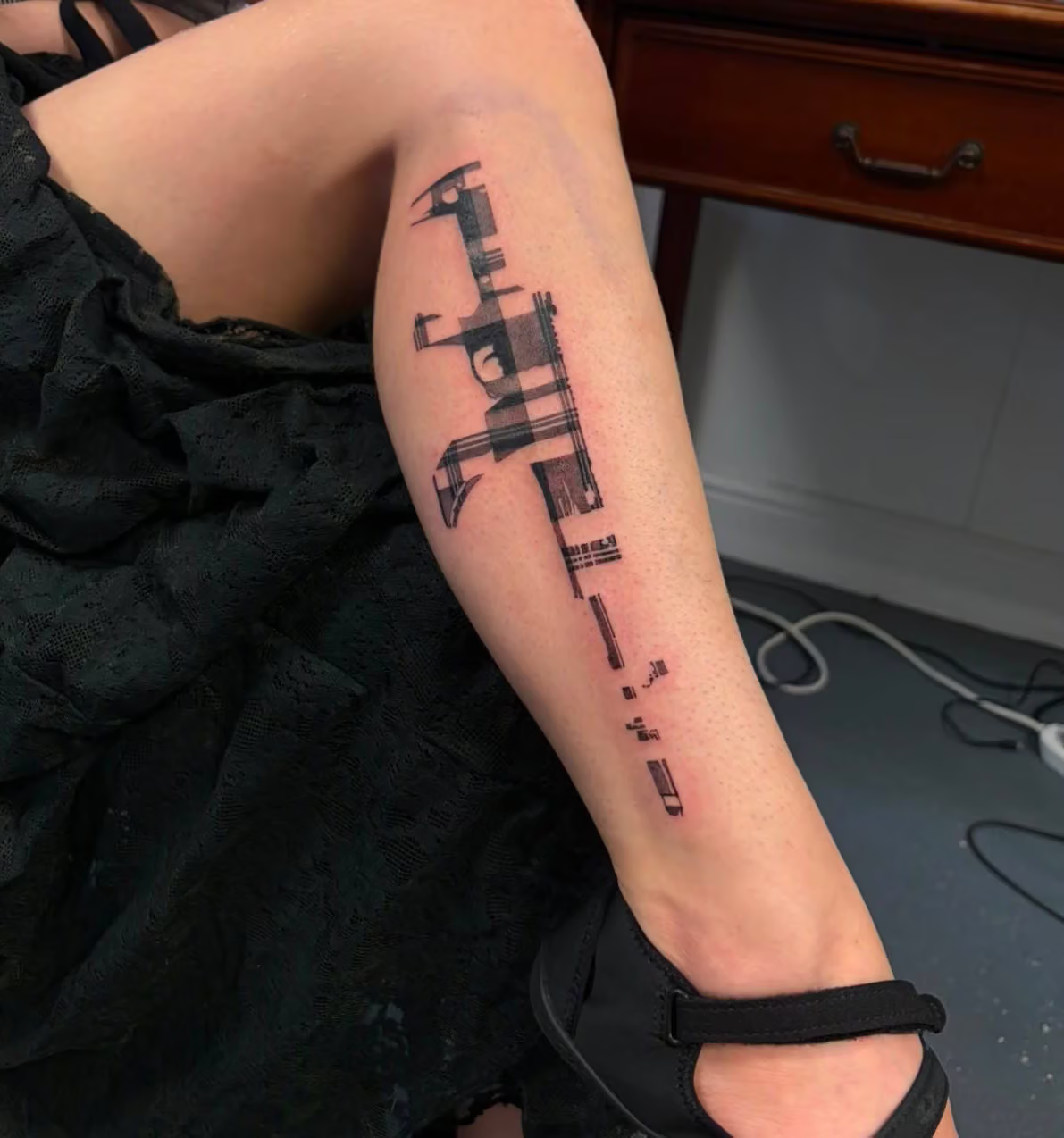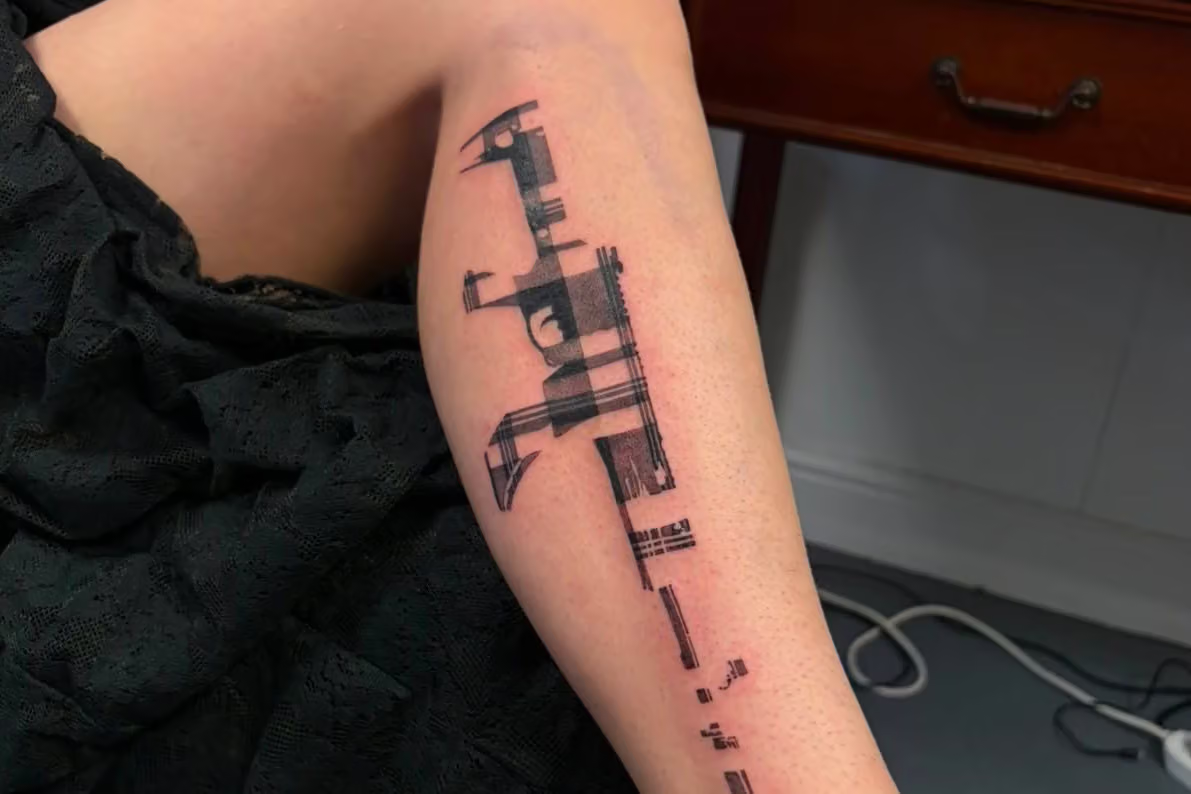
The first tattoo Adam ever gave himself was an AK-47. He was still teaching himself the craft back then, and the result "looked pretty rough, but I liked that it was rough." When his dad saw it, he didn't question why there was a gun on his son's leg—he questioned the choice of gun: "Why'd you pick the one terrorists use? You could've done something more American, like an M16 or AR-15."
26-year-old Atlanta-based tattoo artist Adam (@ineedarocketlauncher) describes himself as "firmly anti-war, anti-fascist." His recent work includes an Uzi, a shotgun, several revolvers, a Glock, an AK-47, an RPG-7, a hand grenade, a gun turret, and most recently, a tank. For him, choosing the AK-47 wasn't random: "It's the weapon most associated with revolution, rebellion, civil war—a lot of people see it as a symbol of resistance and reclaiming power." But he's also honest that the design keeps coming back to him for a simpler reason: "I just think guns are cool."
This contradiction—both political and purely aesthetic—sits at the heart of this gun tattoo wave. Over the past few months, Instagram has seen plaid-patterned M4 carbines, pistols tucked into lace garter belts, sniper rifles surrounded by anime imagery. These designs are emerging at a moment when guns remain one of the most contentious topics in contemporary culture, but this isn't simply pro-gun politics seeping into the tattoo world.
23-year-old Sheffield-based tattoo artist Liv (@polka.pokes) has done about six weapon-themed designs so far, with more lined up. Her favorite piece is a plaid-print pistol running the full length of a client's leg, inspired by the phrase "shot yourself in the foot," blended with the plaid tattoo style she already specializes in. For Liv, this kind of customization turns the gun into pattern material rather than just a lethal object.
22-year-old Atlanta-based tattoo artist Gianna (@meiintattoo) says she's "seen a lot of gun tattoos lately," partly fueled by curated platforms like Pinterest. She also mentions doing a cybersigilism-style sword, which echoes a longer pattern: daggers, swords, and blades have cycled through tattoo culture for years, and with the medieval aesthetic trending recently, people getting swords and maces inked barely raises an eyebrow—because these objects sit at enough historical distance from the violence they once caused.
Guns don't have that distance yet. The scale of gun violence in America, combined with a constant stream of war-zone footage on social platforms, means reactions to these designs are bound to be divided. Gianna says public response tends to fall into two camps: some think it's "so badass" (in a good way), while others "don't get why anyone would want that on their body."
Guns reentering mainstream visual culture could be read as part of conservative culture gaining visibility globally, especially in America. But at the same time, some left-leaning and marginalized communities have started reclaiming guns through frameworks of self-defense and resistance—see movements like Arm the Dolls, or the leftist gun clubs that have popped up in recent years. For Adam, the AK-47 is exactly that symbol: "resistance, power back to the people." But for most tattoo clients, the motivation seems simpler—guns are just cycling through the same visual culture loop and landing in tattoos, the same way any other tattoo trend does.